
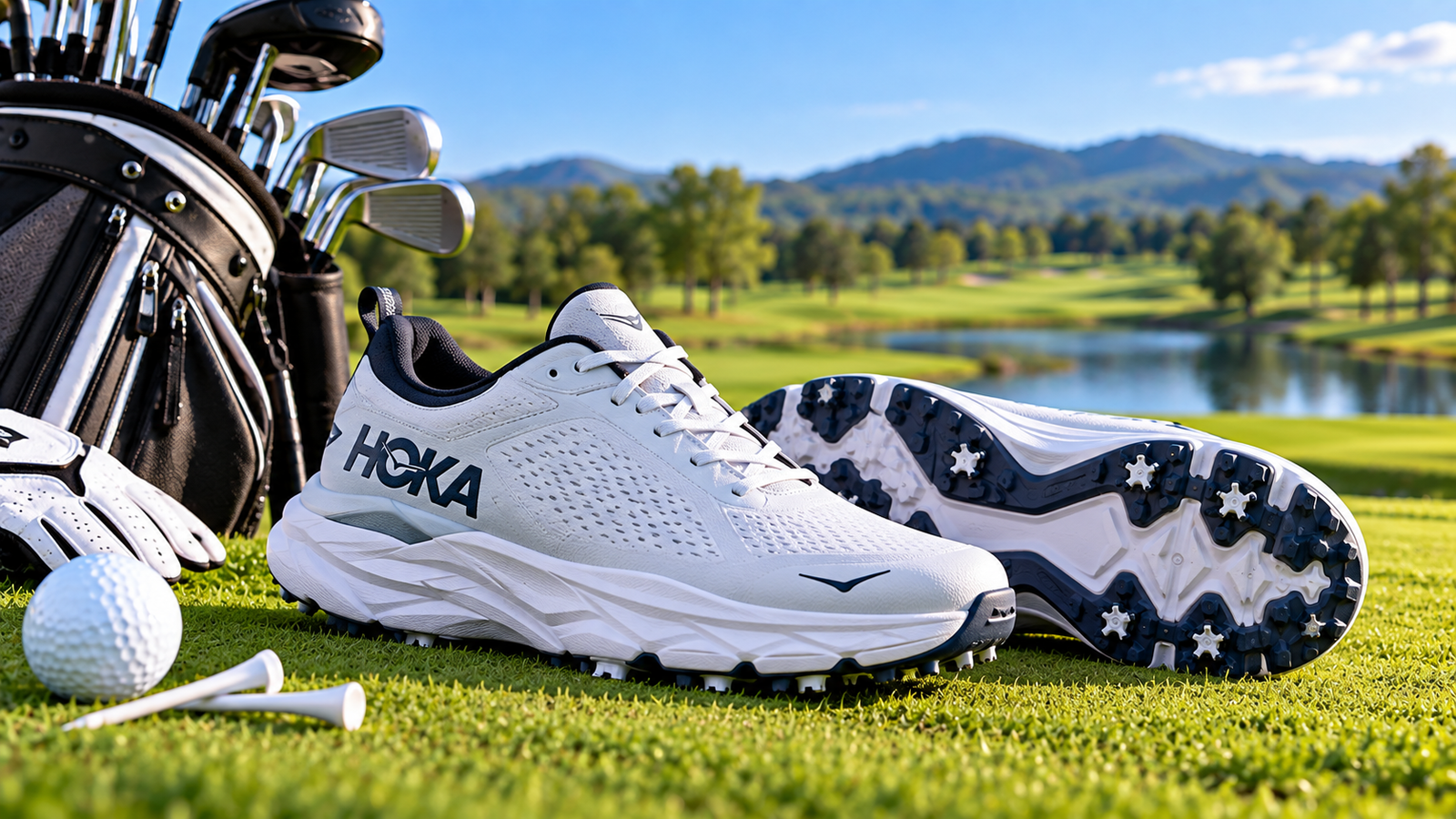
No, Hoka does not make golf shoes. The brand has no golf line, no golf-specific models, and nothing built with a golf outsole. Hoka is a running and outdoor shoe company, so its catalog is full of road runners, trail shoes, hiking boots, walking shoes, and racing spikes, but not a single pair made for the course.
Even so, plenty of golfers lace up Hokas to walk 18 holes, and there are good reasons for that, along with a couple of real trade-offs worth knowing before you try it.
What kind of shoes does Hoka make?
Hoka makes running and outdoor shoes, full stop. The company started in 2009 in Annecy, France, founded by two former Salomon designers, and it has been owned by Deckers Brands since 2013. Its whole identity is thick, soft cushioning, the chunky “maximalist” midsoles you have probably seen on runners and nurses and anyone who stands all day.
The lineup breaks into a few clear buckets. There are road running shoes like the Clifton and Bondi, trail shoes like the Speedgoat, hiking shoes and boots like the Anacapa and Kaha, everyday walking and recovery shoes, and even track and cross-country racing spikes. You can scan the full range on Hoka’s own site, and golf simply is not one of the categories.
Two design choices define almost every Hoka. The first is that oversized midsole, which sits far thicker than a normal shoe and does most of the work of softening each step. The second is a shape Hoka calls the Meta-Rocker, a curved sole that rolls your foot from heel to toe like a rocking chair. Most models also use a low heel-to-toe drop, so your foot sits fairly level. All of this is tuned to keep you moving forward smoothly, which matters later when we talk about standing still and swinging.
One model trips people up. Hoka sells a shoe called the EVO XC Spikeless, and the word “spikeless” makes it sound golf-ready. It is not. That shoe is a cross-country racing flat with a lugged rubber outsole built for running over dirt, grass, and mud, not for standing over a golf ball. The name is about track spikes, not golf spikes, and it has none of the lateral support a golf swing needs.
Can you wear Hoka shoes to play golf?
Yes, you can wear Hoka shoes to play golf, and many walking golfers do. Nothing stops you, and no rule of the game requires golf-specific footwear. If you play a lot of casual rounds and your feet hurt by the back nine, a cushioned pair of Hokas can feel like a real upgrade over stiff, flat golf shoes. Most public courses only ask that you avoid metal spikes, and spikeless everyday shoes clear that bar easily.
The appeal is easy to understand. Walking 18 holes covers roughly four to six miles, most of it on your feet with a bag on your back. Hoka’s deep foam soaks up that mileage, so your legs feel fresher at the end. For a range session, a par-3 course, a cart round, or a dry summer evening, a comfortable pair of trail or road Hokas will do the job just fine.
Who benefits most? Walkers, older players, anyone with sore knees, hips, or feet, and people who are on their feet all day and want that same soft feel on the course. If you carry your bag or push a cart across a hilly layout, the extra cushion is where a Hoka earns its place. Riders feel the difference less, since they are only walking short stretches between shots.
Why Hokas feel so good for walking a round?
Hokas feel so good on the course because they are built for exactly one thing you do a lot of in golf, which is walking. The thick midsole cushions each step, and the curved Meta-Rocker sole helps roll you from one stride into the next, so a long round feels less like a slog. That is real, useful comfort, and it is the honest reason golfers keep asking about them.
There is a flip side hiding in that same design, though. A shoe that is built to roll you forward and cradle your foot in soft foam is not built to lock you in place. Golf asks your feet to do the opposite of running: plant firmly, resist twisting, and stay quiet while the rest of you turns. That gap between rolling forward and staying planted is where the trade-offs start.
Where Hoka shoes fall short on the course?
Hoka shoes fall short in two specific places on the course: grip on wet grass and stability through the swing. Both come straight from the fact that these shoes were built to move you forward in a straight line, not to plant you sideways and let you turn hard against the ground.
Start with the swing. A golf swing loads your feet with twisting, side-to-side force. Real golf shoes fight that with outriggers and stiffer midsections that stop your foot from rolling over the edge. Running shoes do the opposite. They keep your foot neutral and moving forward, and a tall, soft Hoka stack can feel a little tippy when you swing full out, especially off an uneven lie.
The height of that cushion adds to the problem. The taller the stack of foam under your foot, the further your ankle sits from the ground, and the easier it is to roll to the edge when you load into your back leg. On flat, dry turf you may never notice. On a sidehill or downhill lie, where a stable base matters most, a soft tall shoe can feel vague right when you need it to feel solid.
Then there is traction. A spikeless golf outsole uses lugs of different shapes and sizes, laid out in an uneven pattern a bit like a performance tire, so it bites in wet and dry alike. Hoka’s trail lugs are more uniform and evenly spaced, and their grip drops off once the grass turns wet. On a dewy morning or a firm downhill lie, you can feel your back foot slide during the swing. That slip is the main thing keeping a running shoe from replacing a proper spikeless pair.
Waterproofing is a smaller but real gap too. Some Hokas, like the GORE-TEX models, keep your feet dry in wet grass, but plenty of the mesh running shoes soak through fast on a dewy morning. If you tee off early, that is worth checking before you rely on a pair for golf.
Which Hoka shoes golfers actually reach for?
If you are set on playing in Hokas, a few models come up again and again. None of them turns into a golf shoe, but each has a reason golfers pick it, and each has a catch.
| Hoka model | Why golfers like it | The catch |
| Transport GTX | Waterproof GORE-TEX build keeps feet dry through morning dew and light rain; comfortable straight out of the box. | Limited grip on wet grass, so you may slide a little on a hard swing. |
| Speedgoat (trail) | Grippy lugs and thick cushioning that feel great walking and hold well on dry, firm turf. | Traction fades when grass is wet, and the tall stack costs you some stability. |
| Clifton / Bondi (road) | Maximum cushioning for walkers who just want tired feet to feel better over a long round. | Smoother road outsole grips least of the three; best on dry days or from a cart. |
The Transport GTX gets the most attention because it looks the part and its GORE-TEX layer genuinely keeps water out, which is a big deal on a wet morning. The catch is grip: on damp grass it can slide, so it is a better fit for dry days or courses that stay firm.
The trail-focused Speedgoat grips well on dry, packed turf thanks to its aggressive lugs, but that same traction backs off once things get wet. The road models like the Clifton and Bondi are the comfort champions and the worst grippers, so they shine most from a cart or on a dry afternoon stroll.
Notice the pattern. The same tall, soft midsole that makes a Hoka comfortable is also what makes it less stable when you swing hard. You are trading a bit of grip and control for a lot of cushion, which is a fine trade for a relaxed round and a bad one for a wet, competitive one.
Want golf-shoe comfort? What to look for instead
If comfort is the whole reason Hoka caught your eye, the better move is a spikeless golf shoe built like a sneaker. Brands like FootJoy, adidas, Skechers, and Nike now make spikeless shoes with plenty of foam underfoot, so you get most of that cushioned feel without giving up grip or a stable base.
The comfort gap has shrunk a lot in the last few years. Spikeless golf shoes used to feel flat and stiff, but many now use thick, soft midsoles much like the ones that made Hoka famous, paired with a golf outsole that actually grips. That means you no longer have to choose between feeling good over a long walk and staying planted through a swing, which is the exact bind that sends people looking at running shoes in the first place.
When you shop, check four things. Look for a spikeless outsole with varied lugs for real wet-grass grip, some lateral support or an outrigger so your foot does not roll on the swing, waterproofing if you play early mornings, and a midsole that is cushioned but not sky-high, since a lower stack keeps you steadier over the ball. A shoe that ticks those boxes gives you the walkable comfort you wanted from a Hoka and the traction the course actually asks for.
It also helps to match the shoe to how you play. If you always ride a cart on dry afternoons, almost anything comfortable works, and a pair of Hokas is honestly fine. If you walk early rounds on wet grass or you swing hard, lean toward a purpose-built spikeless golf shoe and keep the Hokas for the range and the walk to the clubhouse.
Whichever way you go, test the shoes before a real round. Hit a small bucket at the range, then make a few hard swings off wet grass if you can find some. You will know within ten minutes whether your feet stay planted or start to slide, and that quick check saves you from finding out on the first tee of a round that counts.
Conclusion
Hoka does not make golf shoes, and there is no sign of a golf line coming. What it makes is some of the most cushioned running and trail shoes around, and you can absolutely wear them for casual, dry rounds where comfort matters most. Just know the limits: less grip on wet grass and less stability on a big swing. Play your relaxed rounds in Hokas if you like, and reach for a real spikeless golf shoe when the course gets wet or the round gets serious.
Frequently asked questions
Does Hoka make spikeless golf shoes?
No. Hoka’s EVO XC Spikeless is a cross-country running shoe, not a golf shoe. The “spikeless” name refers to track spikes, and the shoe has no golf outsole or golf-specific support.
Can I wear Hoka running shoes for golf?
Yes, especially for casual or dry rounds and for the walking comfort. Just expect less grip on wet grass and less stability on full swings than a proper golf shoe gives you.
Are Hoka shoes allowed on a golf course?
At most courses, yes. Soft, spikeless footwear is widely accepted, so Hokas are fine anywhere that doesn’t require dedicated golf shoes. Check the dress code at private or stricter clubs first.
Which Hoka is best for golf?
The waterproof Transport GTX suits wet mornings, while a max-cushion road shoe like the Bondi is best for dry walking. Neither matches a real spikeless golf shoe for grip and stability.
Will Hoka release golf shoes?
There is no golf line or golf release announced as of 2026. The brand stays focused on running, trail, hiking, and walking shoes.
Related Articles
How to Wash Golf Grips: Easy Step-by-Step Guide
How to Choose Golf Clubs: A Simple Buyer’s Guide
Payntr Golf Shoes: Best Models, Tech & Sizing Guide
Best Disc Golf Bag for Carrying Discs: 7 Top Picks for Every Player
[…] Does Hoka Make Golf Shoes? What to Know Before You Tee Off […]