
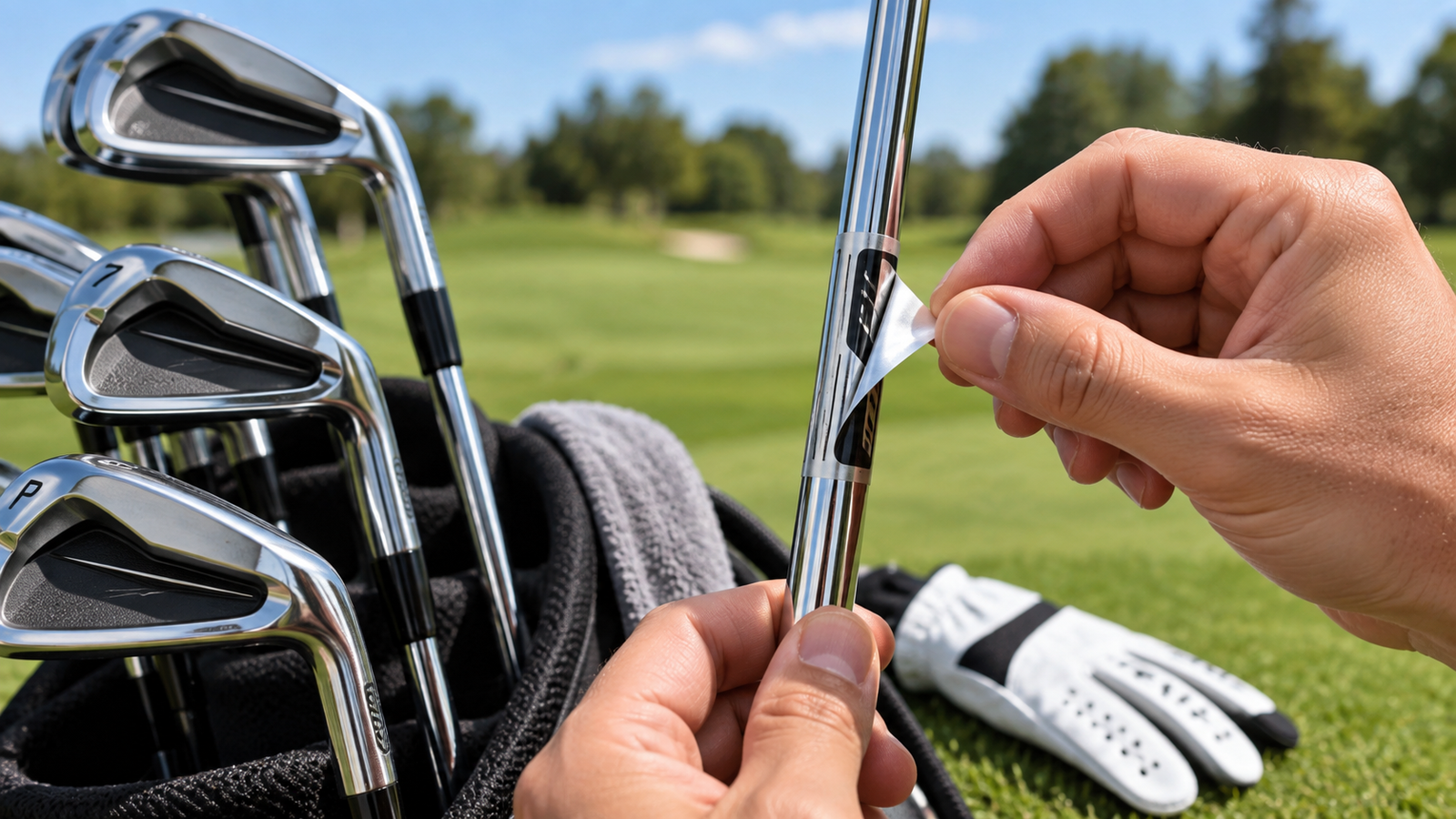
Yes, you can remove the shaft sticker on your golf irons, and it comes down to personal taste. That big label near the grip is cosmetic. It has nothing to do with how the club performs, so peeling it off or leaving it on is entirely your call. Done carefully, removal won’t harm the shaft, the finish, or your swing. Below is the honest answer on whether it’s worth doing, plus a safe way to get it off cleanly.
Do you remove the shaft sticker on golf irons?
There’s no rule either way. Plenty of golfers peel the sticker the day they unbox a new set because they like a cleaner, less busy look. Plenty of others leave it right where it is. Neither choice is wrong, and neither helps or hurts your game.
The one thing to know before you start: the sticker often lists the shaft brand and flex, like “True Temper S300.” Once it’s gone, that quick reference is gone too. If you already know your specs, that doesn’t matter. If you’re not sure yet, jot the details down or snap a photo first, then peel away.
Bottom line: it’s a purely cosmetic decision. Remove it if you prefer the look, keep it if you want the specs handy. Just record the shaft info before it comes off.
Why irons come with a shaft sticker in the first place
The label serves a few practical jobs before the club reaches you. It tells the shop and the buyer exactly what shaft is in the club and what flex it is, which matters a lot when a rack is full of near-identical models. It’s part branding, part spec sheet.
Retailers also lean on these stickers for stock control and pricing. That’s why you’ll sometimes find a second sticker stacked on top with a barcode or a discount tag. All of it is meant for the store and the moment of sale, not for the life of the club. Once the irons are yours, the sticker has done its job.
Reasons to leave the sticker on
Removing it isn’t always the better move. Here are fair reasons to keep it:
- Easy spec reference. The flex and shaft model stay visible at a glance, which is handy if you own several sets or swap clubs around.
- Resale value. If you think you might sell the irons later, an intact factory sticker helps a buyer confirm exactly what they’re getting, and clubs that look untouched can be easier to sell.
- Zero risk. Leaving it on means zero chance of a scratch, a heat mark, or leftover glue. If you’re nervous about the process, doing nothing is a perfectly good option.
If none of those apply and you simply want a cleaner shaft, removal is quick and low-risk once you follow the right steps.
How to remove a shaft sticker without damaging the club
The safest method is heat, then a slow peel. Heat softens the glue so the sticker lifts in one piece instead of tearing and leaving a sticky mess. This works on both steel and graphite shafts when you keep the heat gentle.
You don’t need special gear. A hair dryer, your fingernail or a plastic scraper, and a soft cloth will cover most of it. Here’s the process, step by step:
- Set a hair dryer to low or medium heat. Skip a heat gun on full power, especially on graphite, since too much heat can damage the shaft.
- Hold the dryer about three to four inches from the sticker and move it slowly back and forth for 30 to 60 seconds. You want the glue warm, not the shaft hot.
- While the sticker is still warm, lift one corner with a fingernail or a plastic scraper. An old credit card works well and won’t scratch.
- Pull slowly at a low angle, almost flat along the shaft, rather than yanking straight up. A slow, steady pull lifts the label in one clean piece and leaves far less glue behind.
- If it starts to tear or resist, stop pulling. Warm it again for another 20 to 30 seconds and carry on from the edge you’ve already lifted.
Tip: patience beats force here. The faster you rip, the more glue stays stuck to the shaft, and the more cleanup you’ll face afterward.
A couple of don’ts. Keep sharp metal blades away from the shaft, and never let heat sit near the hosel, the joint where the head meets the shaft, because the glue holding the head on can soften. Keep any liquids off your grips too, since some solvents make rubber slippery.
How to get rid of leftover sticky residue
Even a clean peel can leave a tacky patch. Don’t leave it, because that stickiness grabs grass, dirt, and bag lint fast. A little adhesive remover clears it in a minute.
Put a small amount of your remover on a soft cloth, not directly on the shaft, then rub the spot gently until the glue balls up and wipes away. Good options that are easy on the finish include:
- Goo Gone or a citrus-based adhesive remover, made for exactly this job.
- Rubbing alcohol (isopropyl), which cuts light residue and dries fast without leaving a film.
- WD-40 or a light oil, effective on stubborn glue; just wash the area with a little soap and water afterward so nothing oily is left.
Once the glue is gone, wipe the shaft with a damp cloth and a drop of mild soap, then dry it. If you want the original shine back, a quick pass with a golf-club chrome or steel polish finishes the job. For the product details on the classic residue remover, the Goo Gone Original page lists what it’s safe to use on.
What to avoid: harsh solvents like acetone or nail polish remover. Given time they can dull the shaft’s coating and, on graphite, break down the resin under the paint. Stick with the gentler options above and you’re safe.
Steel vs graphite: does the shaft material change anything?
The basic method is the same, but graphite needs a lighter touch. Steel shafts shrug off heat and most removers without much fuss. Graphite is more sensitive to both high heat and aggressive scraping, so keep the dryer on low, hold it a little farther away, and never take a blade to it.
This table sums up the safe approach for each:
| Step | Steel shaft | Graphite shaft |
| Heat | Low to medium hair dryer is fine | Low heat only; keep the dryer farther back |
| Peeling | Fingernail, plastic scraper, or card | Fingernail or plastic scraper; never a blade |
| Residue remover | Goo Gone, alcohol, or WD-40 | Goo Gone or alcohol; test a small spot first |
| Avoid | Acetone, blades near the hosel | Acetone, high heat, any sharp metal |
For either material, warm gently, peel slowly, and clean with the softest product that does the job. Do that and you’ll finish with a smooth, bare shaft and no sign a sticker was ever there. If you want manufacturer guidance on handling a specific model, the shaft maker’s own site, such as True Temper’s shaft pages, is a reliable place to confirm your specs before you peel.
Conclusion
Removing the shaft sticker on golf irons is optional and safe, so let your own taste decide. If you like a clean look, warm the sticker with a hair dryer, peel it slowly at a low angle, and wipe off any residue with Goo Gone or rubbing alcohol. Record your shaft flex and model first, go gentle on graphite, and keep heat and blades away from the hosel. A good result is a smooth, unmarked shaft with the head still rock-solid.
Frequently asked questions
Does removing the shaft sticker void the warranty?
No. The sticker is a cosmetic label, and peeling it doesn’t affect a normal manufacturer warranty, which covers defects in the club itself. Just avoid damaging the shaft during removal, since damage you cause isn’t covered.
Will taking the sticker off hurt my iron’s performance?
Not at all. The sticker adds no weight or function that matters to your swing. Removing it changes only the look of the shaft, never how the club feels or plays.
What’s the easiest way to remove a golf shaft sticker?
Warm it with a hair dryer for 30 to 60 seconds, then peel slowly from one corner at a low angle. Heat softens the glue so the label lifts in one piece with little residue left behind.
How do I remove sticky glue left on the shaft?
Dab a soft cloth with Goo Gone, rubbing alcohol, or a little WD-40, then rub gently until the glue wipes away. Finish with mild soap and water, and dry the shaft. Skip acetone, which can harm the finish.
Can I remove stickers from a graphite shaft safely?
Yes, with a gentle touch. Use low heat, keep the dryer farther away, and never use a blade. Clean residue with Goo Gone or alcohol rather than harsh solvents, which can weaken graphite’s coating over time.
Related Articles
How Long Does Golf Take? 18 & 9-Hole Times Explained
Mini G Wagon Golf Cart: Price, Specs, and Buying Guide
Bucket of Golf Balls: Sizes, Cost, and How Many You Need
Do Golf Balls Go Bad? The Real Answer
[…] Do You Remove the Shaft Sticker on Golf Irons? […]