
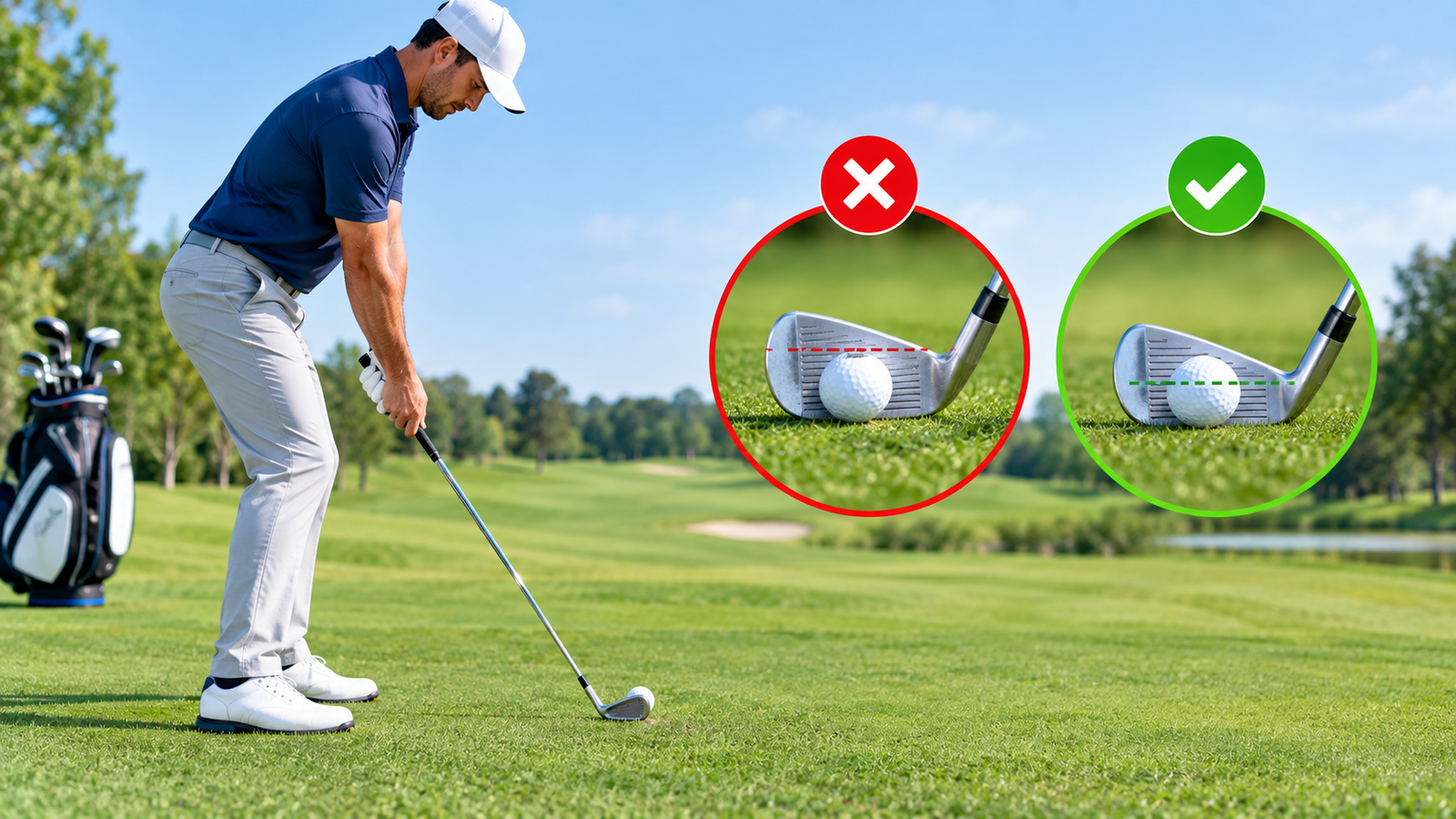
A topped shot happens when the bottom edge of your club catches the top half of the ball, so it skids along the ground or shoots out low and fast instead of climbing into the air. You avoid it by controlling one thing: where your swing reaches its lowest point. Keep your posture through the hit, shift your weight to your front foot, and let the club’s loft do the lifting. Do those three things and topped shots mostly disappear.
The good news is that topping is a contact problem, not a talent problem. It is one of the most common misses for beginners and mid handicappers, and it almost always traces back to two or three fixable habits. Here is what causes it, what to check at setup, and the drills that stop it for good.
What topping the ball actually means
Every swing has a low point, the spot where the clubhead reaches the bottom of its arc. With an iron, that low point should sit slightly in front of the ball, so the club strikes the ball first and then brushes the turf just past it. When the low point drifts behind the ball, or the club is already rising as it reaches the ball, the leading edge catches the ball around its middle or higher. That is a top.
This ties directly to your attack angle, the up or down direction the clubhead is moving at the moment of contact. It is one of the numbers a launch monitor measures, and TrackMan’s explanation of attack angle is a clear primary source on what it means. For irons off the turf you want a slightly downward angle. When the club travels upward through the ball with an iron, thin and topped shots follow.
It helps to tell a top apart from its close cousins. A thin shot catches the ball a little low on the face and flies low but still gets up; a fat shot hits the ground first and comes up short. A true top catches the ball high on the face, so it barely leaves the ground and often runs like a putt. All three share the same root, a low point in the wrong place, which is why the fixes below help your thin and fat shots too.
So nearly every fix comes back to the same goal: get the club moving down and forward through the ball, with your body in the same posture you started in. Once you see topping this way, the long list of causes below turns into small versions of one problem.
Why you top the ball
A handful of faults cause almost every topped shot, and usually more than one is at play. Read through all of them and pick the one that sounds most like your swing.
Standing up through impact. This is the biggest cause. As you swing down, your hips push toward the ball and your chest lifts, which pulls the club up and away from the turf. Coaches call this early extension. Even an inch of lift turns solid contact into a top, which is why a swing can feel fine and still catch the ball thin.
Trying to scoop the ball into the air. Many golfers flick their wrists at the ball to help it up. That adds loft you do not need and pushes the low point behind the ball, so the club is rising at contact. The club is built to launch the ball on its own. Your job is to hit down and let the loft work.
Weight stuck on your back foot. If your weight hangs on your trail foot through impact, the low point moves back behind the ball. The club bottoms out too early and is climbing by the time it reaches the ball.
Ball too far forward. When the ball sits too far toward your lead foot, it can end up past the point where the club bottoms out, so the club is already on the way up when it arrives.
Swaying or a reverse pivot. Sliding off the ball on the backswing, or leaning toward the target going back and away from it coming down, both change your height over the ball. If your head and chest rise even slightly, the club rises with them.
Lead arm collapse. When your front arm folds through impact instead of staying long, the radius of your swing shrinks and the club rides up the ball. This one is sometimes called a chicken wing.
Too much focus on keeping your head down. Freezing your head and staring at the ground can stop your body from turning through the shot, which stalls the swing and lifts the club. Keeping the club moving through the ball matters far more than pinning your head in place.
How to tell which fault is yours
You can narrow it down before you touch a swing coach. Watch where the club meets the turf and where your balance ends up. If you finish with weight still on your back foot and your trail heel flat on the ground, you are hanging back. If your practice divots start well behind where the ball was, your low point is too far back, which points to scooping or hanging back. If you feel yourself rise or your hands pull in tight to your body through impact, that is early extension.
A quick range test sorts most of it out. Hit ten balls off a low tee and film your swing from the side on your phone. Draw a rough vertical line up from the ball at address and watch whether your hips or head drift toward that line on the way down. Movement toward the ball is early extension; movement away from the target on the backswing that does not come back is a sway. Knowing the fault means you can pick the one drill that fixes it instead of guessing.
The setup checks that prevent most tops
Fixing your setup removes a surprising number of topped shots before you even swing. Run through these three every time you practice until they feel normal.
Ball position first. For a mid iron, the ball belongs in the center of your stance. Move it slightly forward for longer clubs and back toward center for wedges. A ball that has crept too far forward is a common hidden cause of thin and topped contact, and it is the easiest thing to get wrong without noticing.
Posture second. Bend from your hips, not your waist, keep your back fairly straight, and let your arms hang down under your shoulders. Add a soft flex in your knees. Good posture gives you room to swing down and hold your height through the ball instead of standing up to make space.
Weight third. Start with your weight even or slightly favoring your lead side with irons, and keep a stable, balanced base. From there the aim is to move toward the target as you swing down, not away from it. A good check is to hold your finish with almost all your weight on your front foot and your trail heel off the ground.
Quick tip: Before every iron shot, picture the club brushing the grass a few inches in front of the ball, not at it. Aiming your low point past the ball is one of the simplest ways to stop topping.
Drills that fix topping for good
Setup gets you close. These drills train the motion so clean contact becomes automatic. Work through them on the range, not on the course, and spend real time on two of them rather than a rushed pass through all six.
- The line drill. Spray a line of foot spray on the clubface or draw a chalk line on the mat, then make swings trying to start your divot just in front of the line. This teaches your low point to move past the ball. Keep going until the marks land on the target side of the line most of the time.
- Tee it low. Tee the ball just barely off the ground with an iron and try to clip it without smashing the tee into the turf. It rewards clean, ball first contact and tells you at once when you are catching the ball thin.
- The wall drill. Set up with your backside a few inches from a wall or the back of a golf cart. Make slow swings and keep your rear brushing the wall through impact. If you feel yourself pulling away from it, that is the early extension that causes topping.
- Headcover under the lead arm. Tuck a headcover or glove under your front armpit and make short swings without dropping it. This keeps your lead arm connected and long through the ball, which stops the arm collapse that rides the club up.
- The step drill. Start with your feet together, then step toward the target with your lead foot as you begin the downswing, and swing. The step forces your weight onto your front side and moves the low point forward where it belongs.
- Pump and hold. Rehearse the downswing halfway, feel your weight move forward while your chest stays down, then hold that position. A few of these before a shot groove the feeling of staying in your posture.
Ten focused minutes on two of these does more than a full bucket of swings with no plan behind them.
Topping with different clubs
The cause can shift depending on what is in your hands, so it helps to know the pattern.
| Club | Most likely cause of a top | First thing to check |
| Irons off the turf | Standing up or hanging back | Hold posture, shift weight forward |
| Fairway woods | Trying to lift the ball | Sweep it, ball slightly forward, no scoop |
| Driver off a tee | Falling backward or ball too far back | Ball forward, tee it up, turn through level |
With fairway woods off the ground, the low, sweeping strike you want makes scooping especially tempting, so trust the loft and brush the turf rather than lifting. With the driver, the ball is teed up and you want a level or slightly upward strike, so a top there usually means you are losing your height or sliding backward instead of turning through the shot.
A simple on-course fix
When tops show up mid round and there is no time to drill, do two things. Grip a touch lighter to cut the tension that makes you flip at the ball, and make one smooth practice swing that brushes the grass in front of an imaginary ball. Then step in and repeat that same brushing swing. It also helps to take one more club than you think you need and swing easier, since a smoother pass keeps your posture and stops you lunging at the ball. Trying to steer or lift the ball under pressure is what brings the top back, so commit to hitting down and through and let the club do its job.
Conclusion
Topping the ball comes down to where your swing bottoms out. Hold your posture through impact, move your weight to your lead foot, and stop trying to scoop the ball into the air, and the club will meet the ball first the way it should. Check your ball position and posture at setup, then groove the motion with the line drill and the step drill. Do that and clean, solid contact becomes your normal shot instead of a lucky one.
Frequently asked questions
Why do I keep topping the golf ball all of a sudden?
A sudden run of tops is usually setup drift. Check that the ball has not crept too far forward and that you are standing the right distance from it. Tension after a couple of bad shots can also make you lift, so slow down and hold your posture.
Does keeping my head down stop topping?
Not really. Forcing your head down often stalls your rotation and lifts the club. It works better to keep your chest turning and the club moving down and through the ball while you hold your height.
Should I hit down on the ball to stop topping?
Yes, with irons off the turf. Aim to have the club still moving down as it reaches the ball, brushing the grass just in front of it. The loft of the club gets it airborne, so you never need to help it up.
Why do I only top my fairway woods?
Fairway woods sit low to the ground and tempt you to help the ball up. Play the ball slightly forward, make a sweeping swing, and trust the club to launch it instead of scooping at it.
Can the wrong ball position cause topping?
Yes. A ball played too far forward can sit past the low point of your swing, so the club is rising when it arrives. Move a mid iron back to the center of your stance and see if contact improves.