
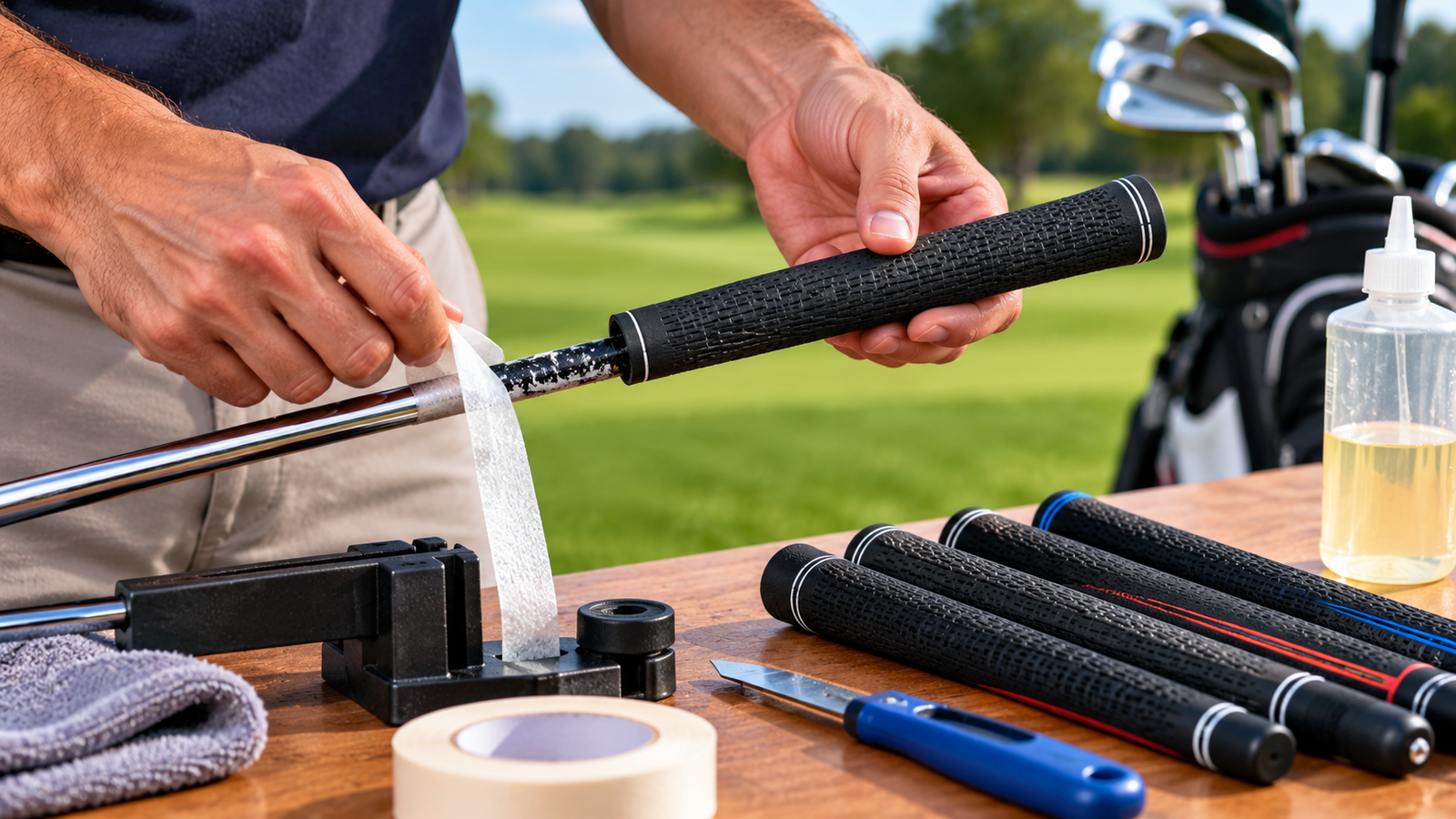
You can change a golf grip at home in about 10 minutes, and the whole job costs far less than paying a shop to do it. All you need is a new grip, double-sided grip tape, some grip solvent, and a blade to cut the old grip off. Fresh grips give you better traction and a lighter, more relaxed hold, while worn ones quietly cost you control.
Here is exactly how to do it, from slicing off the old grip to knowing when the new one is ready to play. The steps are the same whether you are regripping a single driver or a full set, and once you have done a couple of clubs it becomes a job you can knock out at the kitchen table on a rainy afternoon.
What you need before you start
Gather everything first so you are not stopping halfway through with wet hands. The list is short and most of it is reusable for years.
- A new grip, or a full set of them
- Double-sided grip tape, either the roll kind or precut strips
- Grip solvent, or mineral spirits as a cheaper swap
- A hook blade, or a sharp utility knife
- A vise with a rubber shaft clamp, or just your feet to brace the club
- A towel and a tray or bucket to catch the drips
Buy one spare grip the first time you try this. Small mistakes happen on the first club, and a backup means you are not stuck waiting on another order.
How to change a golf grip, step by step
The process is the same for every club. Read it through once, then work one club at a time.
- Secure the club. Clamp the shaft in a vise with a rubber shaft holder so you do not crush it. No vise? Sit down and brace the butt end of the club against the floor between your feet, with the grip end pointing up.
- Cut off the old grip. Run a hook blade down the length of the grip, working from the open end toward the cap, then peel the grip away. A hook blade cuts up and away from the shaft, which keeps graphite safe from nicks. With a straight utility knife, go slowly on graphite shafts or warm the grip first to loosen it.
- Strip the old tape. Peel off the old double-sided tape underneath. If pieces stay stuck, a heat gun or hair dryer softens the glue, and a wipe with solvent or a damp towel takes off the rest. The shaft should be clean and smooth before new tape goes on.
- Measure and cut the new tape. Cut a strip of tape about an inch longer than the grip itself. Hold it against the shaft where the grip will sit, and let that extra inch hang off the butt end of the shaft.
- Apply the tape. Press the tape down the shaft and peel off its backing. Twist the loose inch into a small tail and tuck it inside the open end of the shaft. This seals the hole and stops the grip from bunching the tape as it slides on.
- Soak everything with solvent. Cover the small hole in the grip cap with a finger, pour solvent inside, and swirl it around to coat the whole inside. Then tip that solvent out over the taped shaft so the tape is fully wet. Do this over a tray, because the solvent is the part that lets the grip slide into place.
- Slide the grip on fast. You have less than a minute before the solvent grabs, so keep moving. Push the grip onto the shaft in one steady motion until the shaft bottoms out against the inside of the grip cap.
- Line it up and set it. Square the grip so any logo or alignment mark points where you want it, usually straight up. Tap the cap end on the ground to seat it fully, then wipe off the extra solvent with your towel.
- Let it dry. Leave the club alone for at least four hours before you swing it. A full day is better if you can wait.
Repeat for each club in the set. Once you find the rhythm, each one takes only a few minutes.
How to remove a golf grip without a hook blade
A hook blade is the cleanest tool, but you have two other ways to get an old grip off. The first is heat: run a heat gun or hair dryer along the grip for a minute to soften the glue, then twist and pull the grip free. Work the whole length so it lets go evenly.
The second is an air compressor, which is the trick most club builders use. Push the nozzle into the small hole in the butt cap and give it a short burst. The air balloons the grip off the tape so it slides straight off, and if the grip is still in good shape you can even save it. This method needs no cutting at all, which makes it the safest choice for graphite shafts.
How long before you can play new grips?
Give new grips at least four hours to dry, and a full day is safer. The solvent needs time to evaporate so the tape glue can set hard against the shaft. Swing too soon and the grip can twist or slide on you.
If you regrip a full set the night before a round, you will be fine by morning. Cold or humid rooms slow the drying down, so give it extra time in winter or in a damp garage. If you want to see each step with photos before you start, Golf Pride’s grip installation guide walks through the same method.
How often should you change golf grips?
Change your grips about once a year, or every 40 rounds, whichever comes first. A range or practice session counts as a round for wear. If you play a lot, or live somewhere hot and humid, you may need it twice a year. Tour players swap grips every six weeks to two months, but that is far more than a weekend golfer needs.
The real reason to keep up is control. A Golf Pride study found that a set of worn, two-year-old grips can cost a golfer three to four shots a round on average. A slick grip makes you squeeze harder to hold on, and that tension leaks straight into your swing.
A few clear signs tell you it is time:
- A shiny, slick sheen where your fingers and thumbs sit
- Cracks, splits, or hard glazed spots in the rubber
- The grip feels slippery in rain or on hot days
- You catch yourself gripping tighter just to keep the club steady
Washing grips with warm soapy water every few rounds lifts off dirt and hand oil and buys you more time, but it cannot undo real wear once the rubber has hardened.
Quick tip: mark your regrip date on a small sticker inside your bag pocket. It is the easiest way to know when a year has quietly gone by.
How to pick the right grip size
Match the grip to your gloved hand, and when you are stuck between two sizes, go bigger. Grips come in four sizes: undersize, standard, midsize (about 1/16 inch larger than standard), and jumbo (about 1/8 inch larger). Standard fits the widest range of players and is the safe default if you are not sure.
To size yourself, measure your lead hand, the gloved one, in two ways: from the wrist crease to the tip of your middle finger, and the length of the middle finger on its own. Bigger hands, or a habit of holding the club too tightly, point toward midsize or jumbo. Larger grips calm busy hands and ease strain, which is why players with arthritis or sore hands often size up.
You can also fine-tune the size with tape. Each extra wrap of standard tape under the grip adds roughly 1/64 inch to the diameter, so a couple of wraps nudge a standard grip toward midsize without buying anything different.
Your putter is the exception. Putter grips follow their own shapes and sizes, from thin pistol grips to the fat oversize ones, and the right pick is about quieting your hands on short putts rather than matching your glove. If your putter grip is worn, regrip it the same way, but choose the feel you stroke best with instead of a hand measurement.
Common mistakes to avoid
A few small errors are behind almost every failed regrip. Knowing them ahead of time saves you a wasted grip.
- Not using enough solvent. The tape has to be soaking wet for the grip to slide all the way on. Skimp on solvent and the grip stops halfway, then dries stuck in the wrong spot.
- Working too slowly. Once the tape is wet you have under a minute. Line up the grip in your head first, then slide and square it in one go.
- Cutting a graphite shaft. A straight blade pressed into graphite can score the shaft and weaken it. Use a hook blade that cuts away from the shaft, or take the grip off with air.
- Playing too soon. A grip that has not dried will spin on the shaft during your swing. Give it the full four hours even when you are itching to test it.
- Reusing tired tape. Fresh grip needs fresh tape. Old, thin, or wrinkled tape leaves the grip loose and lumpy, so peel it all off and start clean.
What it costs, and is it worth doing yourself?
Doing it yourself is cheaper, and it is not hard. Grips run about $5 to $9 each. A shop adds $2 to $3 per club to fit them, so a full set of 13 clubs can cost $25 to $40 in labor alone. Your only real startup cost is a hook blade, tape, and solvent, which together come to under $20 and last for many regrips.
The trade-off is time and a short learning curve. The first club feels slow and a little fiddly. By the third one you will have it down. If you have a graphite shaft you are nervous about, or you only need a single club done, a shop is quick and safe. For a full set, regripping at home pays for itself the first time. And after the first set, the blade and leftover tape and solvent are still there, so every regrip after that costs only the grips.
Conclusion
Changing golf grips at home comes down to a clean shaft, fresh tape, enough solvent to slide the grip on, and four hours of patience while it dries. Do it about once a year or every 40 rounds, choose a size that fits your gloved hand, and rinse the grips between changes. Get those basics right and you will hold the club with less tension, swing more freely, and hang onto the shots that worn grips quietly give away.
Frequently asked questions
Can I change golf grips without solvent?
You can use substitutes like mineral spirits, and some people use an air compressor to blow the grip on instead of a liquid. Plain grip solvent is cheap and the safest choice for a first regrip, so start there.
Can I reuse old golf grips?
Rarely. Cutting a grip off usually tears it, and even a carefully removed grip loses its tackiness. Fitting new grips is cheaper and far more reliable than trying to save old ones.
Do I need a vise to regrip clubs?
No. A vise makes the job steadier, but you can brace the club between your feet on the floor. Just line the grip up quickly, since the solvent sets within about a minute.
How much grip tape do I use?
One layer of double-sided tape, cut about an inch longer than the grip, is standard. Add extra wraps only if you want a slightly thicker grip, since each wrap adds around 1/64 inch.
Will new grips really lower my scores?
They will not fix your swing, but they let you hold the club lightly and stay in control. Worn grips can cost several shots a round, so fresh ones remove a problem you may not notice.
Related Articles
How to Throw an Anhyzer Shot in Disc Golf?
Are Nitro Golf Balls Any Good? An Honest Look at the Budget Brand
Do You Remove the Shaft Sticker on Golf Irons?
How Long Does Golf Take? 18 & 9-Hole Times Explained