
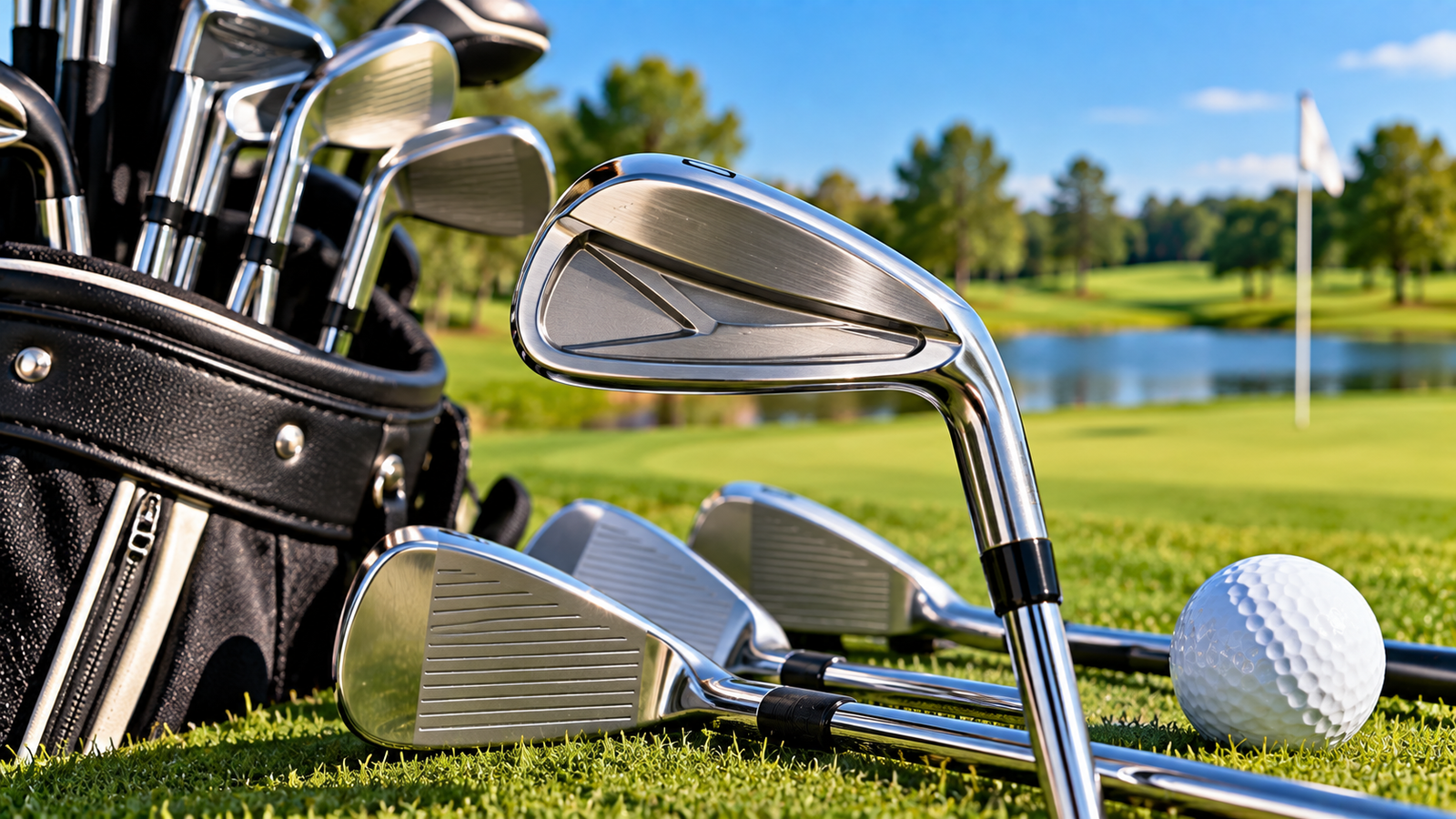
A forged golf club has a head that is shaped by pressing and hammering a single piece of soft carbon steel into form, instead of pouring molten metal into a mold. That one difference in how the metal is worked is the whole meaning of the word “forged.” It changes how the club feels when you hit the ball, how easily you can shape a shot, and usually what you pay.
Almost every forged club is an iron or a wedge, so that is what this guide is about. Here is how forged clubs are made, how they stack up against cast clubs, how they play, and how to tell if a set fits your game.
How a forged golf club is made
A forged club starts as a solid bar of carbon steel, often called a billet. The steel is heated until it turns soft and workable, then squeezed and struck under heavy pressure until it takes the rough shape of a clubhead. This is close cousin to how a blacksmith works metal, only with modern presses doing the striking.
The heat and pressure do more than shape the head. Working the steel this way packs its grain into a tight, even structure and pushes out tiny air pockets, so the finished head is dense and consistent all the way through. The rough head is then spun onto its hosel, ground, and polished until the loft, lie, and weight hit exact numbers.
Because forging squeezes one piece of metal rather than filling a mold, it takes more steps, more time, and more skilled hands. That extra work is a big reason forged sets tend to cost more.
One point often misread: “forged” no longer always means one solid lump of steel. Many modern forged irons are multi-material. The main body is forged from soft carbon steel for feel, then a faster face insert or small tungsten weights are added to boost distance or stability. The head is still forged where it counts, so it keeps that soft impact while gaining help that a single piece of steel could not give on its own.
What metal is a forged club made of?
Forged clubs are made from soft carbon steel, a metal used for quality irons since the 1800s. Common grades carry names like 1020 and 1025 carbon steel, and the “soft” part matters: the steel has to be soft enough to move under the press without cracking. That same softness is what a club fitter relies on later when bending a club to fit you.
Cast clubs, by contrast, are usually made from stainless steel such as 17-4 or 431 grade. Stainless steel is harder and holds up well, but it does not move as willingly under a press, which is why it is poured rather than forged.
Forged vs cast: what actually changes
The clearest way to understand forged clubs is to set them next to cast clubs, since casting is the other main way irons are built. In casting, molten metal is poured into a mold and left to set, which lets makers form deep cavities, wide soles, and heavy perimeter weighting that would be hard to hammer into shape.
That freedom is the real split. Casting is built for complex, forgiving shapes. Forging is built for a dense, simple head with a soft feel. Here is how the two compare on the points that matter most:
| What you notice | Forged | Cast |
| Metal | Soft carbon steel (e.g. 1025) | Stainless steel (e.g. 17-4) |
| Feel at impact | Soft, solid, lots of feedback | Firmer, a bit less feedback |
| Shot shaping | Easy to work the ball | Steadier, harder to curve |
| Forgiveness | Less on classic blades | More, thanks to perimeter weighting |
| Adjustability | Bends easily for a custom fit | Harder to bend |
| Price | Higher | Usually lower |
None of this makes one method better than the other on its own. It makes them suited to different golfers and different goals, which is where the rest of this guide comes in.
The main types of forged clubs
“Forged” describes how the head is built, not one single shape. Once you know the type you are looking at, the rest of the buying choice gets much simpler. There are three you will meet most often:
- Players blades: thin top line, compact head, minimal weighting behind the face. The softest feel and the easiest to work, but the least forgiving on a miss. Aimed at strong ball-strikers.
- Players cavity-backs: forged carbon steel with a hollowed back and some perimeter weighting. Nearly the same feel as a blade with a useful safety net, which suits low and mid handicaps alike.
- Forged distance irons: stronger lofts, thin fast faces, often multi-material. Built for yardage and a slightly firmer feel, for golfers who want length without an all-cast head.
How forged clubs feel and play?
The reason golfers reach for forged clubs is the feel. A well-struck shot with a forged iron gives a soft, solid sensation and a clear sense of where the ball met the face. That feedback is useful: you can tell a flush strike from a slightly thin or toe-side one by feel alone, which helps you learn and self-correct.
Feel is partly personal, and not everyone senses the difference the same way, but the dense grain and soft steel of a forged head are built to deliver that responsive, connected impact. The trade-off shows up on off-center hits, where a simple forged blade gives back less help than a wide, cavity-backed cast head.
Sound is part of feel too. Forged carbon steel tends to give a quieter, duller “thud” at impact rather than a sharp click, and many players read that muted sound as pure. It is a small thing, but it adds to why forged irons feel connected to the hands.
The second draw is control. A compact forged head with the weight kept toward the center, rather than spread to the edges, makes it easier to curve the ball on purpose and flight it up or down. Skilled players use that to shape shots into tucked pins and hold greens. For a maker’s own account of how this shaping is built into the steel, Titleist explains the forging process here.
Are forged clubs only for low handicappers?
No. That idea comes from the old days when forging could only produce thin blades with tiny sweet spots, which really did punish anyone who missed the middle. Those blades still exist and still suit strong players, but they are no longer the whole story.
Makers now forge cavity-back irons, taking the soft feel of forged carbon steel and pairing it with a hollowed-out back and perimeter weighting for extra help on mishits. These sit in the middle ground: softer and more workable than a plain cast game-improvement iron, but far more forgiving than a classic blade. That means a mid-handicap golfer can enjoy forged feel without giving up all the safety net.
Some sets even mix the two, using forgiving heads in the long irons and blade-like shapes in the short irons, so the help is there where you need it and the control is there where you can use it.
Forgiveness and distance
Forgiveness is the one area where cast clubs still hold a natural edge. Poured molds make it simple to push weight out to the toe and heel, which steadies the head on off-center strikes and keeps distance and direction closer to normal. A classic forged blade cannot spread its weight that way, so a bad strike costs you more.
Distance is mostly a design choice rather than a forged-or-cast one. Long-hitting “distance” irons get their yardage from strong lofts, thin fast faces, and low weighting, and those features can be built into either a forged or a cast head. So a forged iron is not automatically shorter; it depends on the model. What a plain forged blade will not do is chase maximum distance at the cost of feel, because that is not what it is designed for.
Wedges are worth a mention here, since they are where forged construction shows up most. A soft forged wedge lets you feel the exact moment the face grabs the ball on delicate chips and pitches, which is why plenty of golfers who play cast irons still carry forged wedges around the green.
Looking after forged clubs
Soft carbon steel is easy to work, which is a plus at the fitting bench and a small chore over time. The same softness that lets a fitter bend your lie angle also means the grooves and face can wear a little faster than hard stainless steel, though for most golfers that plays out over years, not months.
Carbon steel can also rust if it is left wet, since it lacks the chromium that keeps stainless steel bright. Wiping your irons dry after a wet round and not leaving them damp in the bag is enough to keep them clean. A few forged wedges are even sold with a raw, unplated finish that is meant to rust on purpose for a softer look and a bit more grip in the grooves.
None of this shortens the life of a forged set in any real way for a weekend golfer. With basic care they last for years, and a good forged set often holds its value well on the used market, since the feel that draws players to it does not fade the way a fashion feature might.
Quick tip: If you are chasing feel and control and are willing to look after the club a little, a forged set rewards you. If you want the most forgiveness for the money and low upkeep, cast still makes a lot of sense.
Should you buy forged clubs?
Buy forged if you value a soft, connected feel and clear feedback, and if you like to shape shots or want a set you can fine-tune to your swing. You do not need to be a single-digit handicap; a forged cavity-back gives you most of the good feel with real forgiveness built in.
Lean toward cast if your main goal is straight, steady shots with the most help on mishits, or if you want to spend less. And whatever you choose, get fitted before you commit. The soft steel in a forged set bends readily, so a fitter can dial in your lie and loft, and a short session hitting both types will tell you more than any spec sheet. Mizuno, a brand known for forged irons, describes its grain flow forging process here if you want to see how one maker builds feel into the metal.
Conclusion
A forged golf club is one hammered from a single piece of soft carbon steel, and that build gives it a soft feel, clear feedback, and easy shot shaping, usually at a higher price. Cast clubs trade some of that feel for more forgiveness and lower cost. Pick forged if feel and control matter most to you, choose cast if forgiveness and value come first, and get fitted either way so the club matches your swing.
Frequently asked questions
Are forged irons worth it for a mid-handicapper?
Often yes, if you pick a forged cavity-back rather than a blade. You get the soft feel and easy adjustability of carbon steel with enough perimeter weighting to stay forgiving on off-center hits.
Do forged golf clubs really feel softer?
A well-struck forged iron gives a soft, solid feel and strong feedback, thanks to its dense carbon steel head. Feel is partly personal, so it helps to test a set yourself before deciding.
Do forged irons go less far than cast irons?
Not automatically. Distance comes from loft, face design, and weighting, which can be built into either type. A plain forged blade favors feel over raw distance, but many forged models are long.
Do forged clubs rust?
They can, because carbon steel lacks the chromium that protects stainless steel. Wipe them dry after wet rounds and store them dry. Some wedges are sold raw and are meant to rust for looks and grip.
Forged or cast irons for a beginner?
Cast game-improvement irons usually suit beginners best, since they are more forgiving and cost less. A forged cavity-back is a fine step up once your strike becomes more consistent.
Related Articles
How Much Does a Golf Cart Cost?
How Long Do Golf Cart Batteries Last?
Can You Drive a Golf Cart on the Road? What’s Legal and What’s Not
How Fast Can a Golf Cart Go? Real Top Speeds by Type
[…] What Is a Forged Golf Club? […]