
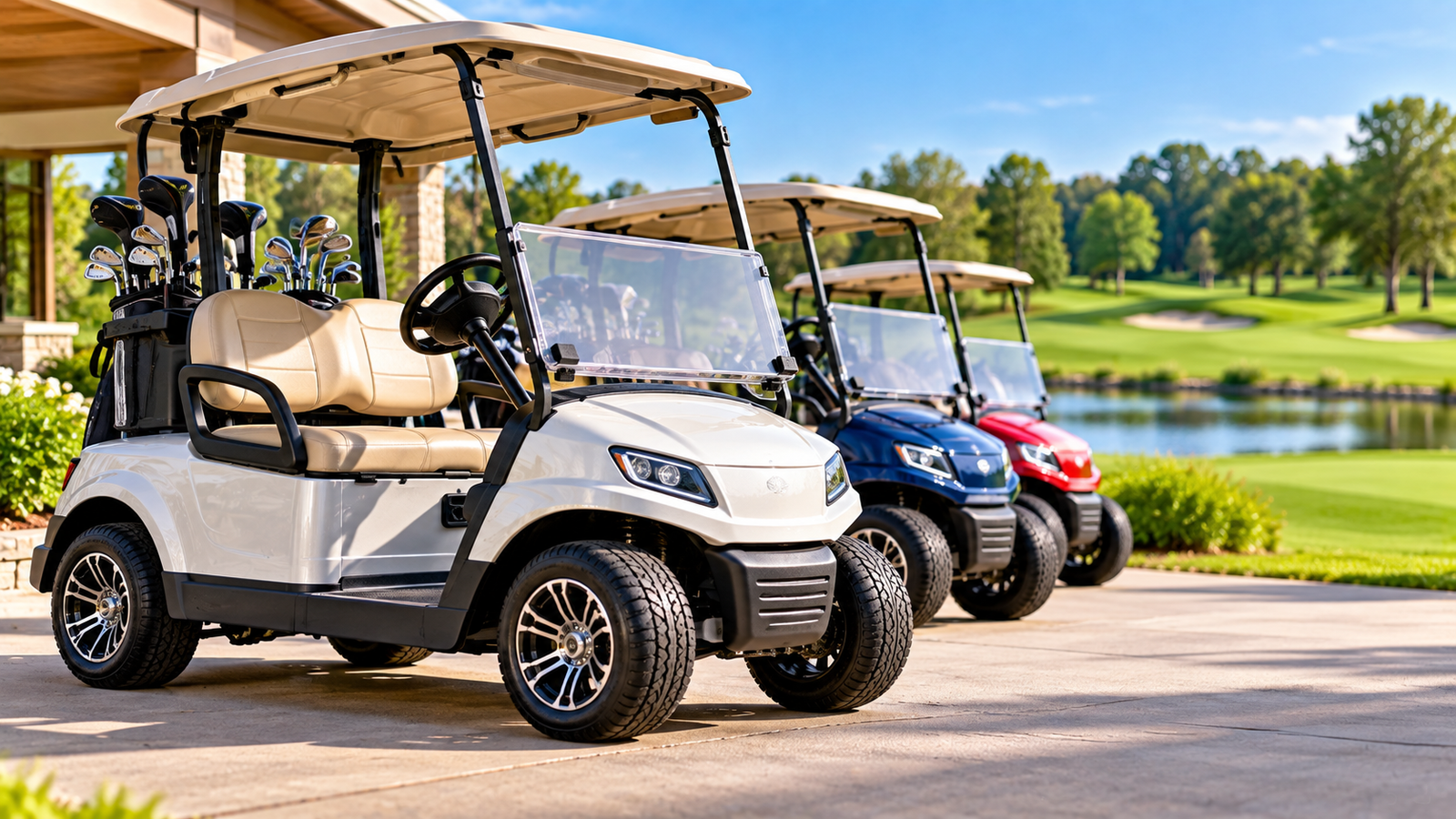
A golf cart costs about $5,000 to $18,000 new and roughly $2,000 to $8,000 used. Where you land depends on four things: how many seats you want, gas or electric, the battery inside, and whether the cart can drive on public roads. A basic two-seater is the cheap end. A six-seat, street-legal, lithium-powered cart is the top end. Here is what real carts cost in 2026, plus the yearly costs a lot of buyers forget to add in.
Golf cart prices at a glance
Most people want the number first, so here it is in one table. These are typical 2026 prices for carts in good shape, before tax and delivery.
| Type | New price | Used price |
| 2-seat electric | $5,000 to $9,000 | $2,000 to $4,500 |
| 4-seat electric | $9,000 to $13,000 | $4,000 to $6,500 |
| 6-seat electric | $10,000 to $16,000 | $5,000 to $9,000 |
| Gas (any size) | $6,000 to $14,000 | $3,000 to $7,000 |
| Street-legal (LSV) | $11,000 to $20,000+ | $7,500 to $17,000 |
| Custom / 4×4 / utility | $16,000 to $23,000 | Varies |
A plain personal cart for getting around a yard or a quiet neighborhood sits at the low end. The price climbs fast once you add seats, a bigger battery, a lift kit, or road-legal gear.
How much a new golf cart costs?
A new golf cart runs from about $5,000 to $18,000, and the two biggest levers are seat count and power.
Seats add up quickly. A two-seater is the base model. Moving to four seats usually adds a few thousand dollars, and a six-seater costs more again. The jump between sizes ranges from a few hundred dollars on budget brands to around $4,500 on premium ones, because a bigger cart needs a longer frame, a stronger motor, and more battery.
Power is the other big factor. A gas cart and a basic electric cart start in similar territory, often $6,000 to $11,000. A new electric cart with a lithium battery can reach $12,000 to $15,000, and loaded models with premium finishes go higher. At the very top, custom builds, four-wheel-drive carts, and utility models run $16,000 to $23,000. These are built for hunting, big properties, or work, not just a ride to the clubhouse.
Remember that the sticker price is not the out-the-door price. Dealers usually add sales tax, a delivery or freight charge, and sometimes a setup fee, which together can add several hundred dollars. Ask for the full total in writing before you commit, so the final number does not surprise you.
Financing is common, and many dealers offer monthly plans, so buyers often think in payments rather than the full price. A cart in the $10,000 range spread over a few years can look easy per month, but the interest adds to what you pay in the end. Compare the total cost, not just the monthly figure.
How much a used golf cart costs?
A used golf cart costs about $2,000 to $8,000, which is often close to half the price of new for a cart only a few years old.
A used two-seater in working order starts around $2,000 to $4,500. A four-seater runs $4,000 to $6,500, and a six-seater lands between $5,000 and $9,000. Used gas carts tend to sit around $3,000 to $7,000.
The battery is the thing to check hardest on a used electric cart, because it is the single biggest hidden cost. A tired battery pack can look fine on a test drive and then need replacing within a year, so ask how old the battery is and how far the cart goes on a full charge. If the pack is near the end of its life, factor a replacement into your offer.
Where you buy changes the price too. A private sale on a local marketplace is usually the cheapest, but you take the cart as is. A dealer costs more and may mark up an older cart, though you get an inspection and often a short warranty. A certified pre-owned cart from a dealer can start near $6,000, checked over and ready to go. Buying at the end of the busy season, in fall or winter, can also bring the price down.
Quick tip: on any used electric cart, a soft or short-range battery is your warning sign. Replacing a pack can cost as much as a decent used cart, so price it in before you buy.
Gas or electric, and what it does to the price
Gas and electric carts start close in price, but they cost different amounts to run.
New prices overlap. A gas cart often runs $6,000 to $14,000, and a comparable electric cart is similar or a little more once you add a good battery. Gas carts can be slightly cheaper up front because they skip the large battery pack.
The gap shows up later. Gas carts need oil changes, spark plugs, filters, and fuel, and they are louder. Electric carts are quiet, cheaper to charge, and simpler to service, but the battery is a big one-time cost every several years.
Speed and range are similar for everyday use. Most personal carts top out around 15 to 25 mph, and a full electric charge covers roughly 20 to 40 miles depending on the battery. Gas carts can go farther on a tank and refuel in a minute, which is why they suit large properties and long days. For short trips around a home or course, electric usually costs less to own.
How the battery changes the price?
On an electric cart, the battery is the single biggest price swing, and the choice comes down to lithium or lead-acid.
Lead-acid is the older, cheaper option. It lowers the sticker price but needs regular topping up with water, weighs more, and lasts fewer years. A lead-acid replacement pack costs about $800 to $2,000 installed.
Lithium costs more but lasts longer, charges faster, needs almost no upkeep, and holds its range better as it ages. Choosing lithium adds roughly $1,500 to $4,000 to a new cart’s price, and a lithium replacement pack later runs about $2,000 to $4,000. Most new lithium packs come with a long warranty, often five to ten years, which softens the higher cost.
If you plan to keep the cart a long time, lithium usually pays back through longer life and lower upkeep. If your budget is tight and you drive lightly, lead-acid still does the job.
What a street-legal golf cart costs?
A street-legal golf cart, also called a low-speed vehicle or LSV, costs about $11,000 to $20,000 new and $7,500 to $17,000 used.
The extra money buys the gear that lets a cart share public roads legally: headlights, tail lights, turn signals, mirrors, seat belts, a windshield, and a vehicle identification number. To count as an LSV under the federal low-speed vehicle safety standard, the cart has to reach 20 to 25 mph and carry that safety equipment. The road-legal package usually adds about $2,000 to $4,000 over a similar personal cart.
Rules vary by state and town, so an LSV that is legal on 35 mph roads in one place may be limited elsewhere. Most street-legal carts also need registration and insurance, which a personal cart used only on private property often does not.
Check your local rules before you pay for the road-legal package. Some communities allow carts on any road under 35 mph, others only on marked cart paths, and a few ask for a driver’s license and a yearly inspection. Knowing the rule where you live tells you whether the extra spend is worth it.
Golf cart prices by brand
Brand affects price too, mostly through build quality, features, and how easy parts and service are to find. Here are typical new price ranges for popular brands in 2026.
| Brand | Typical new price |
| Denago | $7,000 to $13,000 |
| ICON | $7,500 to $14,000 |
| Evolution | $8,000 to $18,000 |
| Yamaha | $8,500 to $14,000 |
| Club Car | $9,000 to $16,000 |
Club Car, E-Z-GO, and Yamaha are the long-established names, often called the big three. They tend to cost more, but they have wide dealer and parts networks, which matters when something breaks years down the line. You can see the range on Club Car’s personal cart lineup, for example. Newer brands like ICON, Evolution, and Denago often pack in more standard features, such as a lithium battery and a screen, for less money. The trade-off is a smaller service network, so check what support looks like near you.
What add-ons and custom work cost?
Add-ons can tack on anywhere from a couple hundred dollars to several thousand, and they are how a $9,000 cart becomes a $15,000 one.
- LED light kit: around $200
- Sound bar or speakers: around $250
- Rear storage basket: around $350
- Lift kit: from about $400, more for larger kits
- Custom seats, wheels, enclosures, and audio: $300 to $4,000 together
- Weather enclosure or cover: $150 to $700
Cosmetic touches like custom paint, upgraded seats, and bigger wheels change the look but not how the cart drives. Practical add-ons like a lift kit, a rear seat, or an enclosure change what the cart can do and where you can use it. Decide which upgrades you actually need before you get talked into a full custom build.
What a golf cart costs to own each year?
Buying the cart is only part of the cost. Running one adds a few hundred dollars a year for most owners.
Charging an electric cart is cheap. At the average U.S. electricity price, a full charge of a mid-size battery costs only a couple of dollars, so a year of normal use is often under $100. A gas cart costs more to fuel and needs oil and filter changes.
Insurance depends on how you use the cart. Basic liability on an off-road cart can run as little as $75 to $150 a year, while full coverage with theft and damage is more like $200 to $400. A street-legal LSV is insured more like a car, often $200 to $600 a year depending on your state.
Registration applies mostly to street-legal carts and is set by your state, usually a modest one-time or yearly fee. Tires wear like any vehicle and cost a modest amount to replace every few years. Simple jobs like charging, cleaning terminals, and swapping a tire you can do yourself, while a shop handles bigger repairs. Budget a little for the occasional belt, brake, or tire, and a lithium electric cart stays cheap to keep on the road.
What you should budget?
For most buyers, a realistic budget is $8,000 to $12,000 for a solid new personal cart, or $4,000 to $6,500 for a good used four-seater. Add about $2,000 to $4,000 if you need it to be street legal, and set aside a few hundred a year for charging, insurance, and upkeep. Match the cart to how you will actually use it, and you avoid paying for seats, range, or road gear you never touch.
Conclusion
A golf cart costs roughly $5,000 to $18,000 new and $2,000 to $8,000 used, with seat count, power source, battery type, and street-legal gear driving the final number. Decide how many seats you need, whether you will drive on roads, and how long you plan to keep it. Then add a small yearly amount for charging, insurance, and upkeep. Buy the cart that fits your real use and you will not overpay.
Frequently asked questions
Is it cheaper to buy a used golf cart?
Usually yes. A used cart runs about $2,000 to $8,000, often near half of new. Just check the battery on an electric model, since a worn pack can cost as much to replace as the cart is worth.
How much does a good golf cart cost?
A solid new personal cart costs about $8,000 to $12,000. That range gets you four seats, a decent battery, and a trusted brand without paying for full custom or street-legal extras.
Why are golf carts so expensive now?
Prices rose with better batteries, more standard features like screens and lithium packs, and higher demand for neighborhood carts. Lithium models in particular carry a premium of a few thousand dollars over basic ones.
How much does it cost to make a golf cart street legal?
The road-legal package usually adds about $2,000 to $4,000. It covers lights, signals, mirrors, seat belts, a windshield, and a VIN, plus registration and insurance in most states.
How long does a golf cart last?
A well-kept cart lasts 20 to 30 years. The battery is the part you replace sooner: lead-acid every four to six years, and lithium often eight to ten years or more.
Related Articles
What Is a Cadet Golf Glove? A Simple Guide to Fit and Sizing
Do Golf Shoes Make a Difference?
How to Clean Golf Shoes Without Wrecking Them?
What Golf Balls Do Pros Use? The Models Behind the Wins
[…] How Much Does a Golf Cart Cost? […]
[…] How Much Does a Golf Cart Cost? […]