
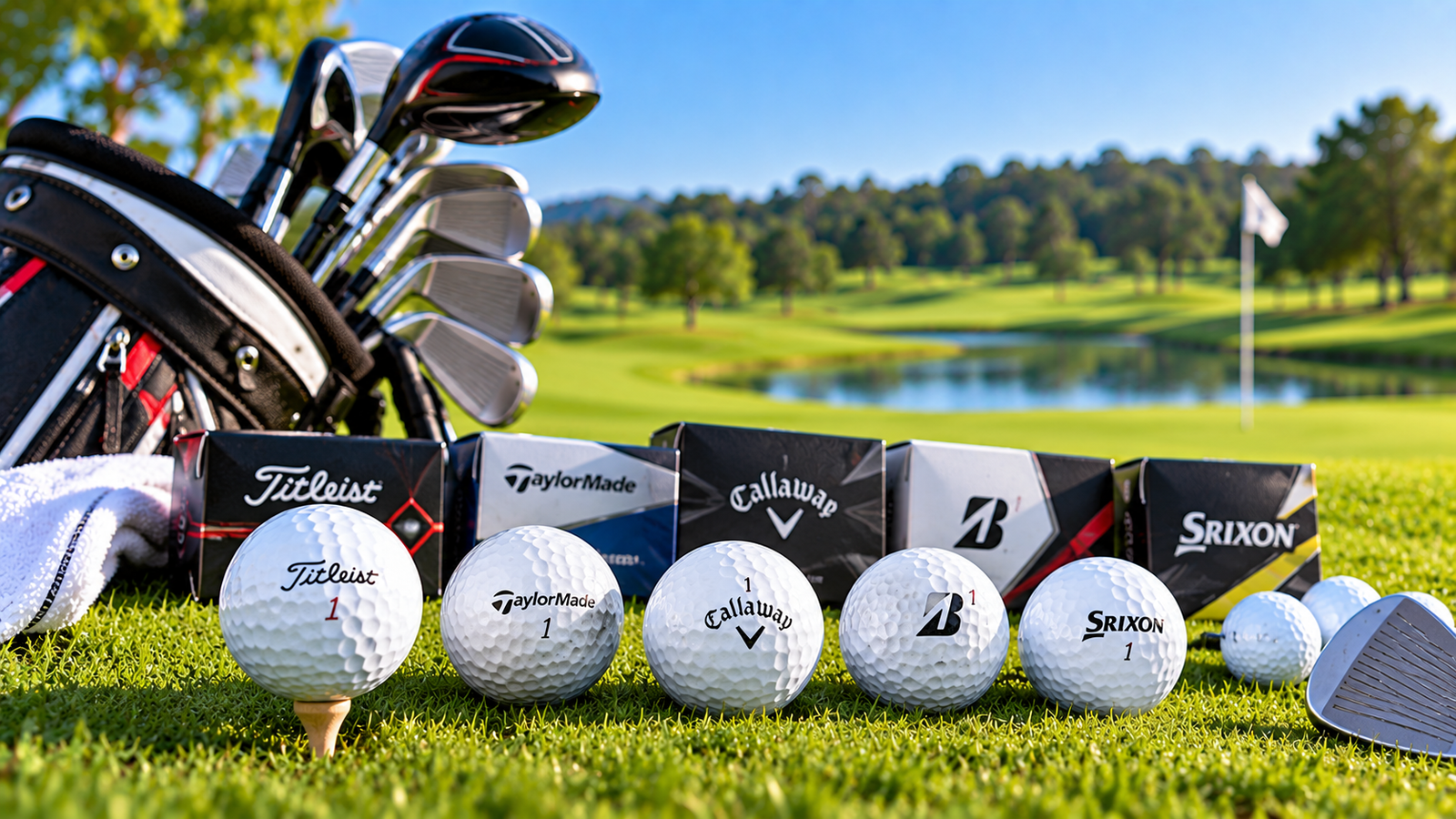
Most tour pros play a premium, multilayer ball with a soft urethane cover, and one brand leads by a wide margin. Titleist Pro V1 and Pro V1x are the most common choices on the PGA Tour, and together with a handful of rivals they cover almost every bag on tour. Srixon, TaylorMade, and Callaway hold most of the rest, and a few players win each year with something different. Here is exactly what the best players in the world put in play, and why it matters for your own game.
Which ball do most pros use?
Titleist is the clear leader. Across the 2025 PGA Tour season, close to 73 percent of the balls in play were Titleist, and the brand’s models won 26 of the 46 events. Among the top 20 ranked players in the world, 12 played a Titleist ball. Srixon was next with four, TaylorMade had three, and Callaway had one.
The single most-played model among the elite is the Pro V1x, closely followed by the Pro V1. Scottie Scheffler, who sat at world number one for most of the season, plays the standard Pro V1 and won six times with it. That kind of result at the very top is a big reason the ball stays so popular. Ludvig Aberg, Bryson DeChambeau, Justin Thomas, and Patrick Cantlay are among the many who choose the firmer Pro V1x instead.
The other brands are far from small players. Srixon’s Z-Star family sits in the bags of Hideki Matsuyama, Shane Lowry, and Keegan Bradley. Rory McIlroy, Collin Morikawa, and Tommy Fleetwood play TaylorMade’s TP5 and TP5x. Xander Schauffele runs the Callaway Chrome Tour. Even smaller names break through: Ben Griffin won twice in 2025 with a Maxfli Tour X, the first tour wins for that brand in over two decades.
The models behind the 2025 wins
A quick look at what actually won shows how the field breaks down.
| Model | Brand | Notable players |
| Pro V1 | Titleist | Scottie Scheffler, Viktor Hovland, Robert MacIntyre |
| Pro V1x | Titleist | Ludvig Aberg, Bryson DeChambeau, Justin Thomas, Patrick Cantlay |
| Z-Star XV | Srixon | Hideki Matsuyama, Shane Lowry, Sepp Straka |
| Z-Star Diamond | Srixon | Keegan Bradley, J.J. Spaun |
| TP5 / TP5x | TaylorMade | Rory McIlroy, Collin Morikawa, Tommy Fleetwood |
| Chrome Tour | Callaway | Xander Schauffele |
The Pro V1 alone accounted for 14 wins across nine players in 2025, and the Pro V1x added 12 more across twelve different winners. Srixon’s Z-Star XV picked up five wins, and the softer Z-Star Diamond took three, spread between J.J. Spaun, Keegan Bradley, and Andrew Novak.
A few victories came on tweaked versions too, such as Cam Young winning with a Pro V1x Double Dot prototype and Aldrich Potgieter closing out a title on an older Pro V1x build. The pattern is steady year after year: a small group of premium balls wins almost everything, and Titleist takes the largest share.
Why pros play a premium urethane ball?
Every ball named above shares the same basic build: several layers wrapped in a thin, soft urethane cover. That cover is the key. Urethane grips the grooves of a wedge or iron, so the ball spins more and stops faster on the green. Cheaper balls use a firmer ionomer cover, often called Surlyn, that lasts longer and flies straighter but spins far less, which makes it hard to control shots close to the hole.
The inside layers do the rest of the work. A firm core gives speed and distance off the driver, while the softer layers around it manage spin on the longer clubs. The result is a ball that flies far off the tee but still checks up on a short pitch. Pros need both at once, so a multilayer urethane ball is really the only choice at that level.
Compression plays a part too. The Pro V1 measures around 90 on the compression scale and feels softer, while the Pro V1x sits near 100 and feels firmer. Faster swingers often prefer the firmer feel, though plenty of hard hitters still play the softer ball. It comes down to what a player likes and what the numbers show in testing.
You can see the payoff on a short wedge shot. A urethane ball can land past the flag, grab, and spin back toward the hole, while a firm distance ball tends to land and run out well past it. For a pro trying to leave a tap-in from 90 yards, that control is the whole point.
Consistency is the quiet reason pros stay loyal. A tour player hits thousands of shots a week and needs each ball to behave the same way every single time. Premium balls are made to tight tolerances, so flight and spin stay predictable across a full box. When your career depends on a two-yard window, that repeatability is worth a lot.
Pro V1 vs Pro V1x, and the rival tour balls
The two Titleist models cover different needs. The Pro V1 has a solid core, feels softer, flies a touch lower, and spins a little less on irons and wedges. The Pro V1x uses a dual core, feels firmer, flies higher, and spins more on approach shots into the green. Both use the same soft urethane cover, so they feel similar on short shots even though they behave differently in the air. Players who want a higher flight and extra stopping power lean toward the x. You can see the full side-by-side on Titleist’s own Pro V1 comparison page.
The rival brands follow the same logic. Srixon’s line runs from the softer, lower-spinning Z-Star, up to the firmer, higher-flying Z-Star XV, with the Z-Star Diamond in the middle for players who want extra greenside spin. TaylorMade splits its TP5 and TP5x the same way, with the TP5x being the firmer, higher option. Callaway’s Chrome Tour and Chrome Tour X mirror that soft-versus-firm split as well.
Once you spot the pattern, the choice gets simpler. Almost every tour ball comes in two flavours: a softer, lower-flying model and a firmer, higher-flying one. Pick the flight and feel you want first, then fine-tune from there.
Do pros play the same ball you can buy?
Mostly, yes. The Pro V1, TP5, Z-Star, and Chrome Tour sitting on the shelf at your local shop are the same models the pros play. Every ball used in a professional event has to appear on the official conforming ball list kept by the game’s governing bodies, and that list is public. You can browse it yourself on the USGA’s conforming golf ball list.
There are a few small wrinkles. Some players use a “double dot” version, which is a marking that points to a slightly different prototype or spec built for that player. Others stick with an older model they trust, since not every pro switches the moment a new version comes out. In 2025 several wins even came on balls that were two or three model years old. But there is no secret, pro-only ball with hidden powers. The ball you can buy is built to the same standard as the one on tour.
How pros choose their ball?
Pros pick a ball through fitting, and they usually work backward from the green. The first thing they check is how the ball spins and feels on short pitches, chips, and putts, because that is where scores are made. Then they look at iron flight and spin, and only last do they check driver speed and total distance. Distance off the tee is the easy part; control into and around the green is what separates a good round from a great one.
Much of that fitting happens on a launch monitor, where a player can see exact spin and flight numbers for each ball on wedges, irons, and the driver. They compare two or three models side by side and look for the one that gives enough greenside spin without spinning so much off the tee that it costs distance or wanders in the wind. Cold weather gets tested too, since balls feel firmer and fly shorter in the cold.
Feel is personal, so two players with similar swings can land on different balls. Some want a soft ball that comes off the putter quietly, others want a firmer click. Wind matters as well, since a lower-spinning ball holds its line better on a windy links. A player who fights a ball flight that climbs too high and spins too much might move to a firmer model to bring it down. Once a pro finds a ball that fits, they tend to stay with it for years, because changing balls shifts distances and spin across every club in the bag.
Does the golf ball really matter?
For a tour pro, the ball is one of the most important pieces of gear they own, and swapping it is a bigger deal than changing a driver. The ball touches every shot, from a 320-yard drive to a two-foot putt, so a change in spin or feel shows up everywhere. That is why many players test a new ball for weeks before trusting it in a tournament.
For the rest of us, the ball matters, but less dramatically. It will not fix a slice or add speed you do not have. What it can do is give you more control on shots you already hit well, and a feel you enjoy over the ball. That is a real gain, just not a magic one.
What this means for your game?
You do not need to copy a pro’s exact ball, but their approach is worth borrowing. A few simple rules help most golfers pick well:
- If you have solid control and want more spin and feel around the green, a premium urethane ball like the Pro V1 or one of its rivals will reward you.
- If you are still working on clean contact, or you lose several balls a round, a cheaper two or three-piece ball is smarter and easier on your wallet.
- Whatever you choose, play the same model every round so your distances and spin stay predictable.
The bigger lesson is commitment. Playing one ball is exactly why pros lock in a single model and stay with it for years. Get fitted if you can, start your testing from the green and work back toward the driver, and pick the ball that matches your flight and feel rather than the one with the most trophies next to its name.
Conclusion
Most pros play a premium multilayer ball with a soft urethane cover, and Titleist Pro V1 and Pro V1x lead the field by a wide margin, with Srixon, TaylorMade, and Callaway close behind. Those balls win because urethane grips the clubface for greenside spin while a firm core protects distance. Pick one ball, get fitted from the green backward, and stay with it. Consistency, not the logo on the box, is what actually lowers your scores.
Frequently asked questions
What golf ball does Scottie Scheffler use?
Scottie Scheffler plays the Titleist Pro V1. He won six PGA Tour titles with it during the 2025 season, which makes it one of the most successful balls in recent memory.
Why do pros use Titleist so much?
Titleist leads because the Pro V1 and Pro V1x deliver the spin, feel, and consistency pros need, and years of wins keep players loyal. Around 73 percent of PGA Tour balls in play are Titleist.
Are pro golf balls different from the ones I can buy?
No. The Pro V1, TP5, Z-Star, and Chrome Tour on store shelves are the same models pros play. Every ball in competition must be on the public conforming ball list, so there is no secret pro-only version.
What is the difference between Pro V1 and Pro V1x?
The Pro V1 feels softer, flies lower, and spins less on irons. The Pro V1x feels firmer, flies higher, and spins more into greens. Both use the same soft urethane cover.
Should I play the same ball as the pros?
Only if it fits your game. A premium urethane ball helps if you want greenside spin and control. If you are still learning or lose balls often, a cheaper model is the smarter pick.
Related Articles
How Much Do Golf Clubs Weigh? A Clear Guide by Club Type
Does Hoka Make Golf Shoes? What to Know Before You Tee Off
How to Wash Golf Grips: Easy Step-by-Step Guide
How to Choose Golf Clubs: A Simple Buyer’s Guide
[…] What Golf Balls Do Pros Use? The Models Behind the Wins […]
[…] What Golf Balls Do Pros Use? The Models Behind the Wins […]