
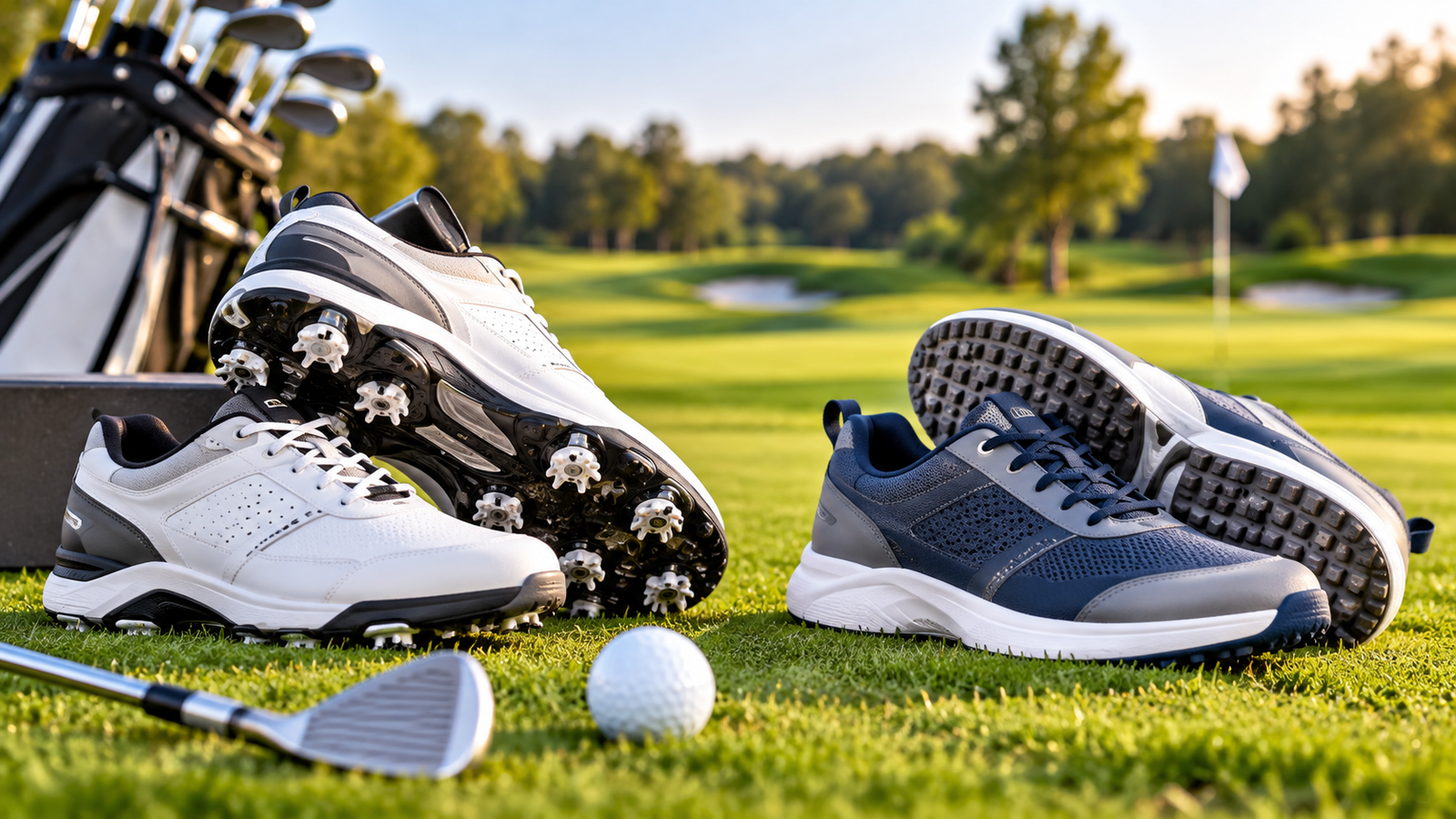
Yes, golf shoes make a real difference, mostly by keeping you gripped to the ground and stable while you swing, and by keeping your feet dry and comfortable across a long round. They will not add 30 yards on their own or fix a slice. What they do is quietly save the shots you lose to slipping, tired feet, and cold wet toes, and over a season that adds up. Here is what a golf shoe actually does, how spiked and spikeless compare, and when a normal pair of trainers is good enough.
What a golf shoe is actually built to do?
A golf shoe is a walking shoe with three big changes: grip made for grass, a stiffer and more stable base, and an upper that keeps water out. The bottom has small cleats or a molded pattern that bites into turf so your feet stay put. The midsole is firmer than a running shoe, which stops your foot from rolling side to side when you turn.
And the shape holds your foot steady while your body rotates hard and fast. Everything else, the colors, the low or high cut, the leather or the mesh, sits on top of those three jobs. When people ask whether golf shoes are worth it, they are really asking whether grip, stability, and dry feet are worth it. For most golfers, they are.
How much does grip really matter?
Grip is the main reason golf shoes exist, and it matters more than most beginners expect. A golf swing is a fast twist, and all that turning force runs down through your feet into the ground. On dry, flat turf in the middle of summer, you might get away with almost any shoe. The trouble is that a lot of golf is not played in those conditions. You play on slopes, in the rough, and on the heavy dew that covers most courses first thing in the morning. On any of those, a smooth sole slides.
When your feet move even slightly during the swing, the club arrives in the wrong spot. That is where thin shots, chunked shots, and the sudden snap hook come from. You feel it most on downhill and sidehill lies, where you are already fighting to stay balanced. Wet grass on a gentle slope is enough to move a smooth-soled shoe, and you may not even notice until the ball comes off wrong. Good traction takes that worry off your mind, so you can think about the shot instead of staying on your feet.
Quick take: the biggest thing golf shoes give you is grip and a stable base. Comfort and dry feet are what keep you swinging that way for all 18 holes.
Golf shoes and the swing
The swing pushes far more force into the ground than most people expect. As you load into your legs at the top and then push off through the ball, the force running through your lower body can reach roughly twice your body weight at its peak. Most of that pressure goes through your lead foot, the one nearest the target, so a shoe that anchors that foot is doing real work. Good players use that force on purpose, pressing into the ground to add both speed and control.
Now think about what happens if your feet slip during that push. You lose swing speed, and worse, you lose control of where the clubface is pointing at impact. A shoe that stays planted lets you use the ground instead of fighting it. This is why brands like FootJoy put so much work into their sole and traction designs, and why newer makers such as SQAIRZ build the shoe around a wider, flatter base so you can push down hard without tipping over. The steadier your base, the more of your effort actually reaches the ball.
Comfort over a long walk
A round of golf on foot covers about 4 to 5 miles, usually over bumpy, sloped ground, and often across three or four hours. That is a lot of steps in one go. Golf shoes are built for that walk, with arch support and cushioning that a flat casual sneaker does not give you. It is easy to treat comfort as a bonus, but it changes how you score.
Tired, sore feet do not stay in your feet. Late in the round, when your legs are worn out, your balance drops and your swing gets sloppy, and that is often why players fall apart on the back nine. Blisters do the same thing in a smaller way, pulling your focus off the shot. Good socks help, but they cannot make up for a shoe that does not fit. A pair that supports your feet keeps you fresh enough to swing the same way on the 18th hole as you did on the 1st. If you ride a cart every time this matters less, but most of the point of walking golf is lost in shoes that hurt.
Do golf shoes keep your feet dry?
Most golf shoes are waterproof, and normal trainers are not, and that gap matters more than it sounds. Morning dew alone can soak through canvas or mesh shoes within the first few holes. Once your socks are wet and cold, it is very hard to think about anything else, and plenty of golfers just quit early. A waterproof pair keeps your feet dry through dew, light rain, and damp rough, so a bit of weather does not end your round or wreck your focus.
There is a difference worth knowing between water resistant and waterproof. Water resistant shoes shrug off a light, dewy morning but give up in steady rain. Fully waterproof shoes, often built with a sealed inner liner, hold out far longer, and many come with a waterproof warranty of a year or two. If you play in the mornings or live somewhere wet, this is the feature to spend on first.
Spiked or spikeless: which should you pick?
Both grip well these days, so the choice really comes down to how and where you play. Spiked shoes use replaceable cleats, soft plastic ones now that metal spikes are banned at nearly every course, and they give the most grip on wet or hilly ground. That is why most tour players still wear them. Spikeless shoes use a molded rubber sole covered in small nubs or dimples. They are lighter, comfortable from the first wear with almost no break-in, and fine to wear from the car to the course to the clubhouse and back. Around half of golfers now pick spikeless, and for casual play on decent ground they are all most people need.
Cost of ownership is a small factor too. Cleats are cheap to swap when they wear down, usually about once a season for a regular player, while the nubs on a spikeless sole slowly smooth out and cannot be replaced, so the whole shoe wears out sooner. A simple way to decide: if you often play in the wet or on steep courses, lean spiked. If you want one pair that does everything and feels good straight away, go spikeless.
| Spiked | Spikeless | |
| Grip | Most, especially wet or hilly | Strong in normal conditions |
| Break-in | Some, can feel stiff at first | Little to none, comfy right away |
| Best for | Wet weather, tournaments | Everyday rounds, walking, versatility |
| Off-course wear | Not ideal | Fine, looks like a sneaker |
| Cleats | Replaceable when worn | Molded in, not replaceable |
Do golf shoes add distance?
Not on their own, and not by much. No shoe adds real yards the way a properly fitted driver or a cleaner strike does. What a good pair gives you is a steady base, and a steady base lets some golfers swing a bit faster and, more importantly, more consistently. A few extra yards can come out of that for some players, but the honest benefit is control and repeatability, not raw power.
Think of it this way. The shoe does not create speed; it stops you from leaking the speed you already have. If your feet slip, some of your effort is wasted keeping you upright instead of moving the club. Take the slip away and more of your swing reaches the ball. So if distance is your goal, spend your time and money on your swing and your clubs first. The shoes support that work; they do not replace it.
Do you actually need them?
If you play a handful of times a year, mostly hit the driving range, or only play dry, flat courses in summer, a pair of grippy flat trainers will do the job fine. What you want to avoid is smooth soles, sandals, or anything that slides on grass, because those cost you both grip and, on many courses, entry. Plenty of golfers start out in regular sneakers, and there is nothing wrong with that while you work out whether the game sticks.
The picture changes once you play regularly, walk the course instead of riding, or tee off in the morning or in wet weather. In those cases a real pair pays for itself quickly in comfort and saved shots. There is also the practical side: many courses have a dress code that rules out running shoes, and none allow metal spikes, so it is worth checking the club’s rules before you turn up. Once you are past the beginner stage and playing often, golf shoes stop being optional and start being basic kit.
How to choose a pair that suits you?
Fit comes first, ahead of brand, price, or looks. You want a snug heel that does not lift, with a little room in front of your toes, because your feet swell over a long round. Try shoes on at the end of the day when your feet are at their largest, and walk around in them before you decide. If you are between sizes or have wide feet, check whether the model comes in a wide fit, since a shoe that pinches will ruin an otherwise good round.
After fit, match the shoe to your golf. Pick waterproof if you often play mornings or in the rain. Go spikeless if you want one pair for everything, or spiked if grip in the wet is your main worry. You do not need the most expensive pair on the wall; mid-priced shoes grip and keep water out just as well for most players, and you mainly pay more for lighter materials and longer-lasting waterproofing. Whatever you buy, make sure it feels good to walk in, because you will be on your feet for hours at a time.
Conclusion
Golf shoes make a difference in the ways that quietly cost you shots: grip so you do not slip mid-swing, a stable base so you can push into the ground, and dry, supported feet over 4 to 5 miles of walking. They will not buy you distance, but they help you swing the same way on the last hole as on the first. If you play often or walk the course, a comfortable, well-fitting pair is worth the money. If you only play now and then on dry ground, grippy trainers can hold you over.
Frequently asked questions
Can I wear running shoes to play golf?
You can on a dry, flat course, and many beginners do. But running shoes slide on wet or sloped grass and often break a course dress code, so treat them as a stopgap, not a real replacement for golf shoes.
Are spikeless golf shoes good enough?
For most golfers, yes. Modern spikeless soles grip well in normal conditions and are comfortable to walk in. Choose spiked shoes only if you often play in wet weather or on hilly courses where extra grip helps.
Do golf shoes help beginners?
Yes. Stable, grippy shoes make it easier to stay balanced through the swing, which is exactly what a new golfer struggles with. You do not need an expensive pair, just one that fits well and grips the grass.
How long do golf shoes last?
A regular player usually gets one to two years out of a pair before the grip wears down or the waterproofing fades. Spiked shoes can last longer because you can replace the cleats when they wear out.
Are expensive golf shoes worth it?
Not always. Mid-priced shoes grip and keep water out just as well for most players. You mainly pay more for lighter materials, longer-lasting waterproofing, and comfort, which matter most if you play a lot.
Related Articles
How to Wash Golf Grips: Easy Step-by-Step Guide
Does Hoka Make Golf Shoes? What to Know Before You Tee Off
How Much Do Golf Clubs Weigh? A Clear Guide by Club Type
What Golf Balls Do Pros Use? The Models Behind the Wins
[…] Do Golf Shoes Make a Difference? […]
[…] Do Golf Shoes Make a Difference? […]