
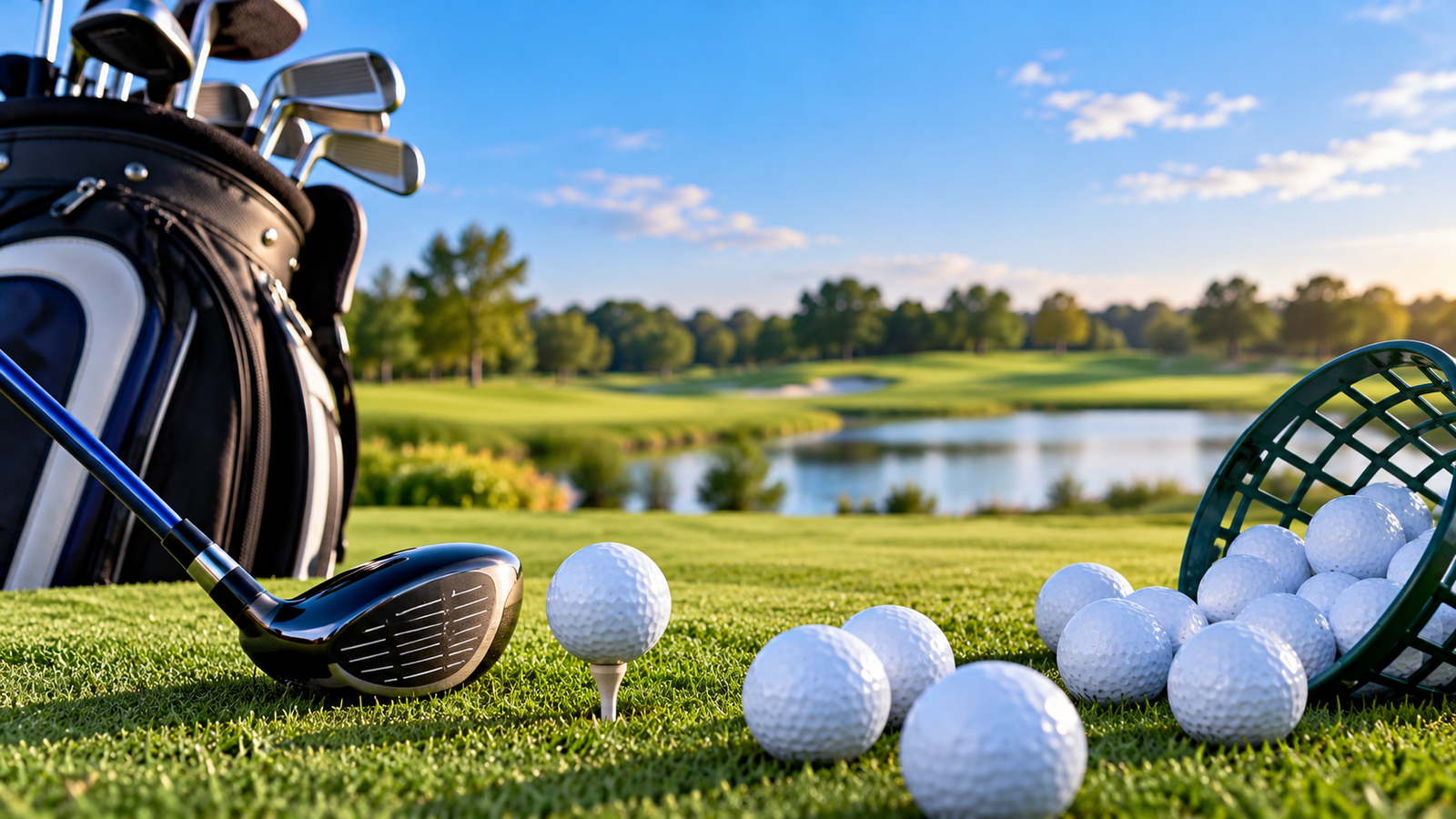
The best golf balls for beginners are usually affordable, durable models that are easy to launch and give a predictable feel. You do not need an expensive tour ball to learn the game. Start with a two-piece ball from a trusted brand, choose a feel you like, and use the same model for several rounds so you can learn how it behaves.
For most new golfers, the Callaway Supersoft, Srixon Soft Feel, and TaylorMade Distance+ are sensible starting points. The right choice depends on whether you value a soft feel, extra distance, visibility, or the lowest cost per ball.
The best beginner golf balls at a glance
| Golf ball | Best for | Why consider it |
| Callaway Supersoft | Best all-round starting point | Soft feel with a design aimed at distance and control |
| Srixon Soft Feel | Soft feel and everyday value | A straightforward option for golfers who prefer a softer response |
| TaylorMade Distance+ | Distance-focused beginners | A practical choice if getting more yardage is the main goal |
| Titleist TruFeel | Players who like a soft feel from a major brand | A softer-feeling option for everyday rounds |
| Wilson Duo Soft | Golfers who want a very soft feel | Worth trying if a gentle impact feel matters most |
| Pinnacle Soft | Budget-minded beginners | A simple option when keeping replacement costs down matters |
Models, availability, and prices can change by year and retailer. Treat this as a shortlist to test, not a promise that one ball will automatically add yards or fix a slice.
1. Callaway Supersoft: Best all-round starting point
The Callaway Supersoft is a strong first ball to try if you want a soft feel without jumping to a premium tour model. Callaway describes its current Supersoft as designed for ball speed, soft feel, control, and spin from tee to green. Its cover and core are built to balance distance with feel rather than focus on only one trait.
That makes it a useful all-round candidate for a new golfer who hits a mix of drives, iron shots, chips, and putts. It is also sold in different colors in many markets, which can help if you struggle to track a white ball against the sky or grass.
Best for: Beginners who want one ball for most situations and prefer a soft impact feel.
Keep in mind: A soft feel does not guarantee straighter shots. If you regularly slice the ball, swing path and clubface direction matter far more than changing golf balls.
You can check the current features and available options on the official Callaway Supersoft product page.
2. Srixon Soft Feel: Best for a soft, everyday ball
The Srixon Soft Feel is worth comparing with the Supersoft if you want a comfortable feel for full shots and putting. It is positioned as an everyday ball rather than a high-priced tour model, which suits golfers who are still learning contact and distance control.
A consistent ball can be more useful than a premium one when you are building basic skills. The Soft Feel gives you a familiar option to use for tee shots, approach shots, and short-game practice without paying extra for advanced greenside spin you may not yet use consistently.
Best for: New golfers who want a soft-feeling ball from an established golf brand.
Keep in mind: The name alone does not tell you how the ball will feel to you. Feel depends on the impact, club, and personal preference, so test it with both a wedge and a putter if possible.
3. TaylorMade Distance+: Best for distance-focused beginners
TaylorMade Distance+ is a practical option if your main goal is to get a dependable flight and make the most of your current swing. Distance-focused balls are designed around speed and long-game performance, which can be appealing when you are still working on solid contact.
Beginners often benefit from a simple, durable ball more than a tour ball built for precise spin control. Distance+ is worth testing if you prefer a firmer response or mainly want an affordable ball for drives and full shots.
Best for: Golfers who prioritize distance and value over a very soft feel.
Keep in mind: No ball can replace a centered strike. If you are losing distance because of thin, topped, or heel strikes, lessons and practice will usually help more than switching models.
4. Titleist TruFeel: Best for players who want a soft feel from Titleist
Titleist TruFeel is a lower-priced option within the Titleist range and is aimed at golfers who like a soft feel. It can suit a beginner who wants to try the brand without paying for a premium tour model.
The most useful reason to consider TruFeel is consistency. Once you find a ball that feels comfortable and behaves predictably, keeping it in play for several rounds helps you learn how far your clubs carry and how the ball reacts on chips and putts.
Best for: Beginners who value soft feel and want an accessible Titleist option.
Keep in mind: A recognizable brand does not automatically make a ball better for your swing. Compare the price and feel with other beginner-friendly models before deciding.
5. Wilson Duo Soft: Best for golfers who like an especially soft feel
Wilson Duo Soft is another ball to consider if a soft impact feel is high on your list. Beginners who find firmer balls harsh may prefer its feel, especially on putts and shorter shots.
Soft-feeling balls can make practice more pleasant, but softness is only one part of the decision. You still want a ball that is easy to see, durable enough for regular play, and priced so losing one does not ruin your round.
Best for: New golfers who put feel ahead of a distance-first design.
Keep in mind: A very soft ball will not necessarily fly farther for every player. Your swing speed, strike quality, launch angle, and the ball’s design all affect distance.
6. Pinnacle Soft: Best for keeping costs down
Pinnacle Soft is worth a look if you want to keep your spending modest while learning. When you are new, lost balls are part of the game. Paying less per ball can take the pressure off and help you focus on making a good swing instead of worrying about the cost of every shot.
A budget-friendly ball is also useful for practice rounds, casual play, and days when you are trying a new course. Choose a model that is easy to identify and buy enough of the same type to avoid changing feel from hole to hole.
Best for: Beginners who want a straightforward, budget-conscious option.
Keep in mind: Check the current model and packaging when shopping, since product names and versions can change. Compare the per-ball cost rather than judging a box only by its sticker price.
What should beginners look for in a golf ball?
The best beginner ball is one that fits your current game and budget. These are the main features worth checking.
A soft or moderate feel
Feel is personal. Some golfers like a soft response off the putter, while others prefer a firmer click. If you can, test a few balls around the putting green before buying several dozen. You do not need to choose the softest ball available; choose one that feels comfortable and gives you confidence.
A durable, affordable cover
Many beginner-friendly balls use an ionomer-based cover. These covers are generally practical for everyday play and tend to cost less than premium urethane-covered balls. Urethane can offer more greenside spin, but that extra control may not be worth the higher price while you are still losing balls and learning contact.
A design that suits your priorities
Distance-focused models can be attractive if you want help with long shots. Softer-feeling models may suit players who care more about touch and putting feel. There is no single feature that makes a ball ideal for every beginner, so decide which benefit matters most to you.
Visibility you can track
White is familiar, but yellow and other high-visibility colors may be easier to follow in certain light or against a particular background. If you often lose sight of your shots, try a colored ball. Choose a color you can spot both in flight and on the ground.
Consistent performance
Use one model for several rounds before switching. If you play a different ball on every hole, it becomes harder to learn your carry distances and how shots react on the green. Consistency helps you judge whether your swing is improving.
How do you choose the right ball for your game?
Match the ball to your biggest need, then test it on the course.
- If you want an all-round option: Start with Callaway Supersoft or Srixon Soft Feel.
- If distance is your priority: Compare TaylorMade Distance+ with another distance-focused model.
- If you want a soft feel: Try Titleist TruFeel or Wilson Duo Soft.
- If you lose several balls per round: Start with an affordable model such as Pinnacle Soft and focus on keeping the ball in play.
- If visibility is a problem: Look for the same model in a bright color rather than changing the ball’s performance category.
Swing speed can help guide your choice, but you do not need to measure it before buying your first dozen. If you later get a club fitting or use a launch monitor, ask the fitter to compare ball flight, launch, spin, and carry distance with a few suitable models. The longest result on one shot is not always the most useful ball over a full round.
Should beginners buy expensive tour golf balls?
Most beginners do not need to spend premium prices on tour-level golf balls. Premium models are built to provide a particular mix of distance, spin, and control, including the ability to shape shots and stop the ball quickly around the green. Those features can matter more as contact and short-game technique improve.
At the start, the bigger gains usually come from learning to strike the ball, choosing the right club, and keeping more shots in play. An affordable ball is easier to replace and lets you practice without worrying about losing an expensive one.
That does not mean a beginner is forbidden from playing a premium ball. If you already have some, use them. Just avoid assuming a higher price will lower your score on its own.
How many golf balls should a beginner buy?
Start with one or two dozen of the same model, depending on how often you play and how many balls you tend to lose. Buying a large bulk pack can lower the cost per ball, but only do that after you know you like the model.
Mark your balls with a personal dot or line so you can identify them and line up putts. Before each shot, make sure you are playing your own ball. If you are practicing over water or thick rough, use a cheaper ball you are comfortable losing.
The goal is not to make every ball last forever. It is to choose a model you can afford to play consistently while you improve.
Conclusion
The best golf balls for beginners are affordable, durable, and comfortable to hit. Start by comparing Callaway Supersoft, Srixon Soft Feel, and TaylorMade Distance+ if you want a useful shortlist, then consider Titleist TruFeel, Wilson Duo Soft, or Pinnacle Soft based on feel and budget. Pick one model, play it for several rounds, and track how it performs. Consistency and practice will matter more than buying the most expensive ball.
Frequently asked questions
What is the best golf ball for a complete beginner?
Callaway Supersoft is a sensible all-round starting point because it balances soft feel with distance and control. Srixon Soft Feel is another strong option. Try one model for several rounds before deciding if you need something different.
Are soft golf balls better for beginners?
Soft golf balls can feel comfortable and suit many new players, but they are not automatically longer or straighter for everyone. Choose based on feel, flight, visibility, and price, then compare results with your normal swing.
Should beginners use Pro V1 golf balls?
Beginners can use Titleist Pro V1 balls, but most do not need to pay premium prices while learning. An affordable ball is easier to replace, and consistent contact and course decisions usually have a bigger effect on scores.
Do golf balls make a difference for beginners?
Yes, balls can differ in feel, flight, spin, and durability. However, the difference is usually less important than making solid contact and keeping shots in play. A consistent, affordable model is a good place to start.
How many golf balls should a beginner carry?
Carry at least six to nine balls if you are still losing several during a round, and bring extra for a course with water or thick rough. The exact number depends on your experience and the course, so keep a few spares in your bag.
Related Articles
Golf Driving Range: Beginner Guide and Practice Tips
How Wide Is a Golf Cart? Widths by Model & Seats
What Does Scratch Golfer Mean? Handicap 0.0 Explained
What Is a Scramble in Golf? Rules, Handicaps & Tips
[…] Best Golf Balls for Beginners: 6 Easy Picks […]
[…] Best Golf Balls for Beginners: 6 Easy Picks […]
[…] Best Golf Balls for Beginners: 6 Easy Picks […]