
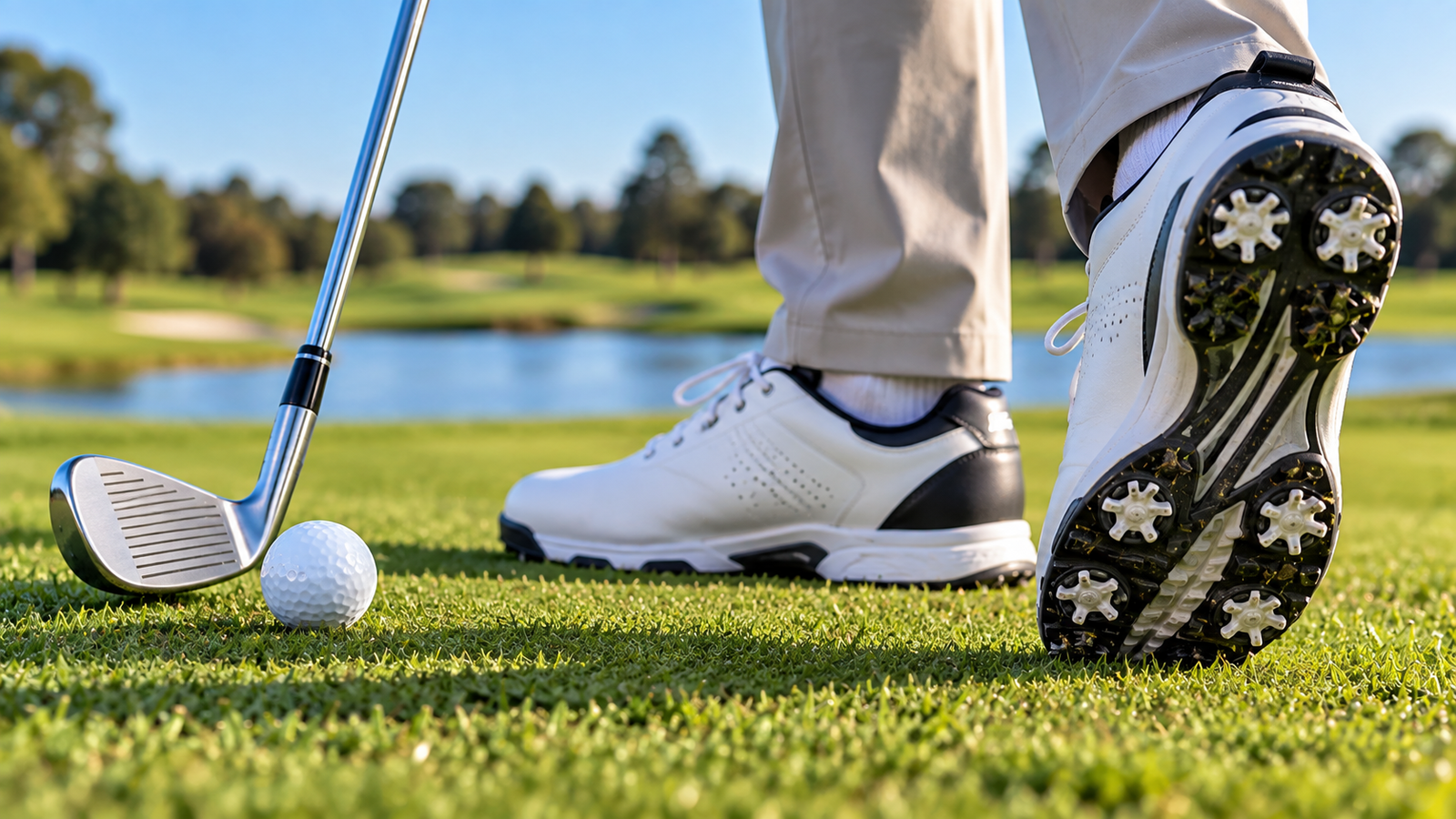
Golf shoes are not strictly required to play, but they help. A good pair gives you better grip during your swing, keeps you steady on slopes and wet grass, and stops your feet from getting soaked halfway through the round. On top of that, most courses expect them. So the honest answer is that you can play without golf shoes, but you will play better and fit in more easily with them.
Whether you actually need a pair comes down to three things: where you play, how often you play, and the conditions you play in. Let’s break each one down so you can decide if it’s worth spending the money.
What golf shoes actually do for your game
Golf shoes are built for one motion: the swing. When you swing a club, your body twists hard and your weight shifts from one foot to the other. That force wants to push your feet sideways. Golf shoes are made to stop that from happening.
Here is what sets them apart from ordinary trainers:
- Grip that holds through the swing. The soles have soft spikes or molded rubber nubs that dig into the turf, so your feet stay planted while your upper body rotates.
- Sideways support. A wider, firmer sole keeps your foot from rolling when you’re standing on a slope or shifting weight fast. Running shoes are built to cushion you moving forward, not to hold you steady while you twist.
- Dry feet. Most golf shoes are waterproof or water-resistant. Morning dew and light rain won’t leave you squelching around for four hours.
- All-day comfort. A full round on foot can be five or six miles. Golf shoes are shaped to keep you comfortable over that distance in a way flat sneakers often aren’t.
The payoff shows up in your contact with the ball. When your feet stay locked to the ground, you can push off harder and stay balanced, which means more power and cleaner, straighter shots. It’s most noticeable when the ball sits above or below your feet on a hill, exactly where poor traction sends your shot off line.
Simple version: golf shoes keep your feet still so the rest of your body can move freely. That balance is where control and distance come from.
Can you play golf in regular sneakers?
Yes, you can play in regular sneakers, and plenty of beginners do. There’s no rule in the game itself that penalizes you for it. If you’re heading to the driving range, playing a casual par-3, or just trying golf for the first time, sneakers will get the job done.
The catch is that not all sneakers work equally well. Running shoes are the worst choice. Their soles are built with deep, uneven treads meant for moving in a straight line, and they can chew up the putting greens. They also offer almost no sideways support, so you may slip during your swing.
If you’re going to use sneakers, pick a flat pair with a molded rubber sole and a decent grip. Trail shoes tend to work better than road-running shoes because they’re built for grip and stability on soft, uneven ground. On a dry, firm day, a solid pair of flat sneakers can feel close to a spikeless golf shoe.
When you can skip golf shoes
There are plenty of times when sneakers are perfectly fine and buying golf shoes would be overkill. You can skip them when:
- You’re at the driving range hitting a bucket of balls, not walking a course.
- You’re playing a casual par-3 or a relaxed public course with a loose dress code.
- You’re brand new to the game and not ready to spend on gear yet.
- The ground is hard and dry, which shrinks the grip gap between a good sneaker and a golf shoe.
The flip side is when golf shoes go from nice-to-have to nearly essential. Early mornings on dewy grass, rounds after rain, and hilly courses all make proper traction matter a lot more. If you play often, in changing weather, or you’re starting to care about your score, that’s the point where a pair earns its price.
What golf course dress codes say about footwear
Even when your swing doesn’t demand golf shoes, the course might. Footwear rules vary a lot depending on where you play, and showing up in the wrong shoes can mean an awkward chat at the pro shop, or being turned away.
Here’s how it usually breaks down by course type:
| Course type | Footwear rule |
| Private clubs | Proper golf shoes almost always required. Sneakers can get you turned away. |
| Resort courses | Usually strict but flexible. Golf shoes expected; clean athletic shoes sometimes allowed. |
| Public / municipal | Most relaxed. Clean sneakers with flat soles are often fine, though rules still vary. |
A few rules are close to universal. Metal spikes are banned almost everywhere because they tear up the greens, so any golf shoe you buy will have soft spikes or a spikeless sole. Running shoes, sandals, and flip-flops are also off the table at most courses. The safest move is a quick call to the pro shop before you drive out, since a course’s own website is the only place its exact rules live. The rules of golf don’t cover footwear directly, but the game’s governing bodies still guide course etiquette, and you can read the official standards on the USGA’s rules pages.
Spiked vs spikeless: which should you get?
If you decide to buy, you’ll choose between two main types. Both grip far better than a sneaker, and neither uses metal.
Spiked golf shoes have replaceable soft plastic cleats on the sole. They give you the most grip, especially on wet grass, soft ground, and hilly layouts. If you play in changeable weather or want maximum stability, these are the pick. The trade-off is that they’re less comfortable to walk in off the course and a little bulkier.
Spikeless golf shoes have molded rubber nubs built into the sole instead of removable cleats. They look and feel much like normal trainers, so you can wear them from the car park to the course and even into the clubhouse. They’re comfortable, versatile, and grip well in most normal conditions. They give up a bit of traction in very wet or steep situations.
For most beginners, spikeless shoes are the smart first buy: they cover the vast majority of rounds, feel comfortable straight away, and double as casual shoes.
Many keen golfers end up owning both, using spiked shoes for wet or serious rounds and spikeless ones for dry days and quick nine-hole outings. But you don’t need two pairs to start.
How to pick your first pair
Choosing your first golf shoes is simpler than the wall of options makes it look. Focus on a few things that actually matter:
- Fit first. Your feet should feel snug but not pinched, with a little room at the toe. Try them on with the socks you’ll wear to play.
- Match the type to your play. Spikeless for casual and dry rounds, spiked if you often play in wet or hilly conditions.
- Check for waterproofing. If you play in the mornings or in a rainy climate, a waterproof pair is worth the extra cost.
- Set a sensible budget. You can get a solid entry-level pair without spending a fortune. Spend more only once you know you’ll play often.
- Prioritize comfort over looks. You’ll be on your feet for hours. A shoe that feels good beats one that only looks good.
If you want to compare current models and features, most major brands list their full lineups online. FootJoy’s spikeless Pro/SL range is a popular starting point that shows what a versatile everyday golf shoe looks like.
Conclusion
Golf shoes aren’t mandatory, but they’re a smart buy for anyone who plays more than the odd casual round. They give you steadier footing, more control over your shots, and dry, comfortable feet, and they keep you inside the dress code at most courses. If you’re just starting out or only hit the range, sneakers with a flat, grippy sole will do. Once you’re playing real courses regularly, a comfortable spikeless pair is the easy, worthwhile choice.
Frequently asked questions
Do golf shoes really make a difference?
Yes, mainly in grip and balance. They keep your feet planted through the swing, which helps you stay steady and hit cleaner shots, especially on slopes or wet grass. The difference is small on a dry, flat day and larger in tough conditions.
Can I wear running shoes to play golf?
You can, but they’re the worst sneaker choice. Their deep treads can damage greens and give little sideways support, so you may slip mid-swing. A flat, molded-sole sneaker or trail shoe is a better stand-in if you don’t own golf shoes.
Are golf shoes worth it for beginners?
If you plan to keep playing, yes. A comfortable spikeless pair improves your footing while you learn and keeps you dress-code safe. If you’re only testing the sport at the range, hold off and use sneakers until you’re sure.
Will a golf course turn me away for wearing sneakers?
It depends on the course. Private clubs usually require golf shoes and may refuse you. Public and municipal courses are far more relaxed and often allow clean sneakers. Call the pro shop first if you’re unsure.
Spiked or spikeless for a first pair?
Spikeless is the better first buy for most people. It’s comfortable, versatile, grips well in normal conditions, and works on and off the course. Choose spiked shoes if you regularly play in wet weather or on hilly courses.
Related Articles
How to Wash Golf Hats Without Ruining Them?
How to Throw an Anhyzer Shot in Disc Golf?
Are Nitro Golf Balls Any Good? An Honest Look at the Budget Brand
Do You Remove the Shaft Sticker on Golf Irons?