
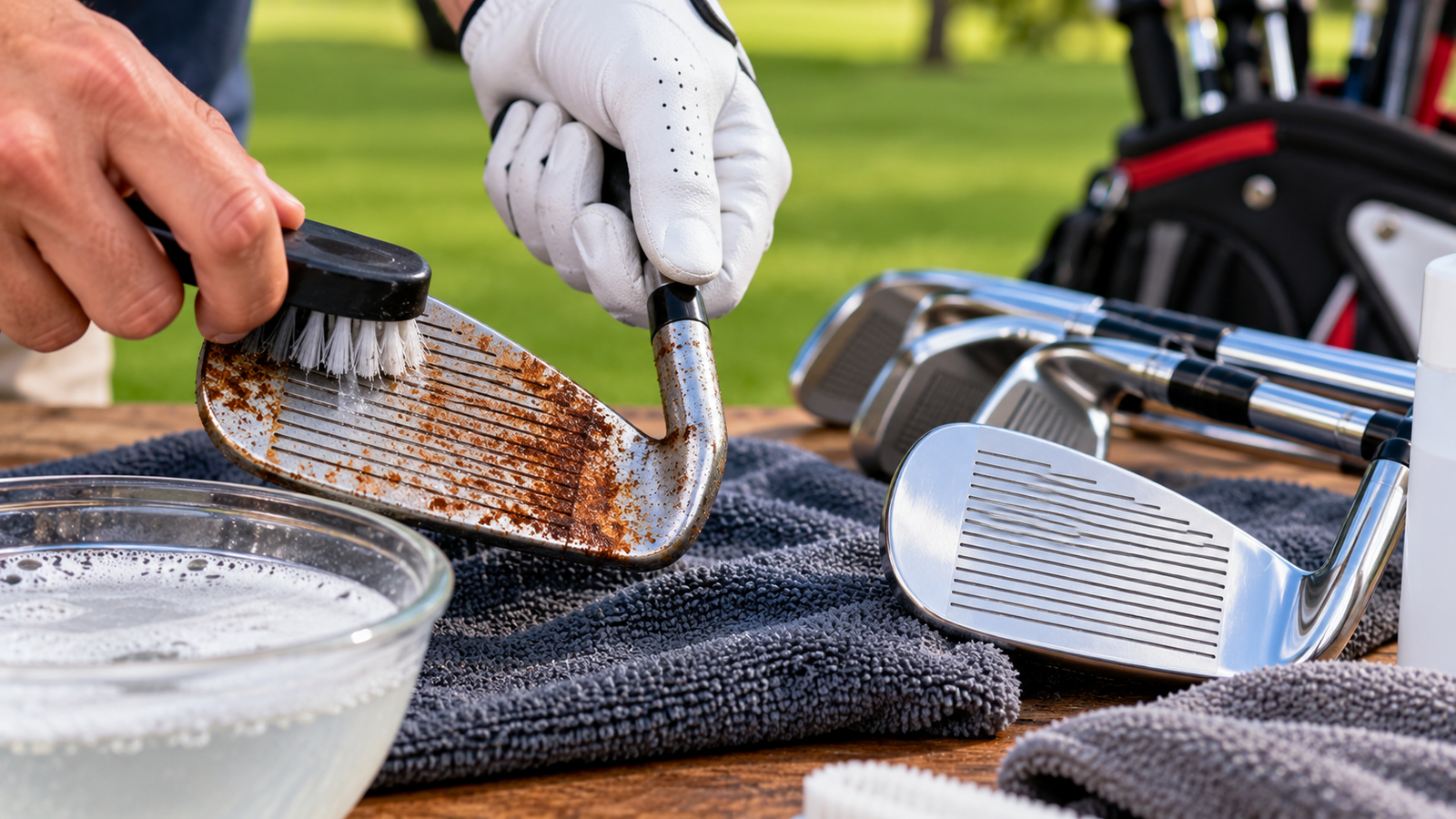
To remove rust from golf clubs, soak the rusty club head in white vinegar for 30 minutes to an hour, scrub the softened rust with a soft brush and ultra-fine (0000) steel wool, then rinse it, dry it completely, and wipe on a thin coat of oil so the rust does not come back.
Most light surface rust lifts off in one sitting with things you already have at home. The main thing to get right is which clubs you can safely scrub and which ones are built to look that way on purpose.
This guide covers the whole job: why clubs rust, the supplies you need, the safe soak-and-scrub method, how to handle heavy rust, and how to clean the shaft, grooves, and finish without doing damage.
Nothing here needs special gear, and none of it takes more than an afternoon. It ends with a few habits that stop rust from starting again, which is the part that saves you the most work in the long run.
Why do golf clubs rust?
Most iron and wedge heads are made from carbon steel, and steel rusts when iron in the metal meets water and air. That is why rust shows up fastest after wet rounds, morning dew, or storage in a damp garage. Grass, dirt, and sweat make it worse, because they hold moisture against the face long after you are done playing.
Chrome plating and other finishes slow this down by putting a barrier over the steel, but the moment that layer chips or wears thin, the bare metal underneath starts to rust. Knowing this makes the fix obvious: get the rust off, then keep water off the metal.
A little rust is normal and not a sign you have done anything wrong. Clubs are tools, and steel reacts with the world around it. What matters is catching it early, while it is still a surface stain and not a deep pit.
First, check what kind of club you have
Not every rust spot needs fixing. Some wedges are made from raw, unplated carbon steel that is meant to rust over time. The light patina that forms adds a bit of friction and can help grip the ball on short shots, so scrubbing it off actually works against the design. If you have a raw or rust-finish wedge, leave the surface alone and clean only the grooves.
Everything else is fair game. Most irons, older forged blades, chrome-plated wedges, and steel shafts clean up safely. One rule matters most: know whether your club is chrome-plated or bare steel before you start.
Chrome plating is the bright, mirror-like layer you see on most irons, and hard scrubbing or coarse abrasives can cut through it and leave dull marks you cannot undo.
Bare carbon steel looks flatter and grayer, and it is more forgiving to scrub, but it also rusts faster once it is clean, so it needs the protective step at the end. If you are not sure which you have, treat the club as chrome and stay gentle.
What you’ll need
- White vinegar or lemon juice, the acid that loosens rust
- A soft-bristled brush, like an old toothbrush (never a wire brush)
- Ultra-fine 0000 steel wool
- Warm water and a little dish soap
- Two microfiber towels, one for cleaning and one for drying
- A light machine oil for protection
- Rubber gloves, if your skin is sensitive to vinegar
Skip the wire brush, sandpaper, and coarse scouring pads. They take rust off fast, but they also leave scratches and can strip chrome plating. Fine steel wool and a soft brush do the job without the damage.
How to remove rust from iron and wedge heads
This is the core method, and it works for most surface rust.
- Soak only the head. Fill a shallow container with white vinegar, deep enough to cover the club head but not the ferrule (the small collar where the head meets the shaft) or the shaft. Rest the club so only the metal head sits in the liquid, and leave it for 30 minutes to an hour.
- Scrub the softened rust. Lift the head out and work the surface with a soft brush dipped in vinegar. Pay attention to the grooves and any stamped numbers, where rust likes to hide.
- Tackle stubborn spots. For rust that stays put, rub gently with 0000 steel wool in small circles, using light pressure. Let the fine steel wool do the work rather than pressing hard, and keep checking the surface so you stop as soon as the rust is gone.
- Wash and rinse. Dip the head in warm, soapy water for a few minutes, give it a final light scrub, then rinse it under clean water. Leftover acid keeps eating at the metal, so rinse it all off.
- Dry it completely. People skip this step, and it is the most important one. Wipe every part of the head, including the grooves and the hosel, with a dry microfiber towel. Any water left behind starts new rust within hours.
- Add protection. Put a few drops of light oil on a cloth and wipe a thin film over the head. On chrome clubs you can use a metal or chrome polish instead for extra shine.
That is the full cycle for light to moderate rust, and it usually takes under an hour of hands-on time. If you are doing a whole set, work through the clubs one at a time so none of them sit wet while you deal with the others.
How often should you clean rusty clubs?
Do a full rust removal only when you can see and feel real rust, not after every round. For most players that means once or twice a season, plus a check at the start of the year when clubs come out of winter storage. Overdoing the vinegar and steel wool wears on the finish, so it is not something to repeat for no reason.
Between those deep cleans, the light stuff does the heavy lifting. A dry towel after each round and a quick face-and-groove wipe keep new rust from ever getting a foothold, so the big clean stays quick when it does come around.
What to do about heavy or pitted rust
Heavy rust needs more time, not more force. If one soak does not lift it, put the head back in the vinegar and leave it longer, up to several hours or even overnight for badly rusted heads. Check it now and then and scrub between soaks. The longer soak keeps softening the rust so the steel wool has less to fight, which means fewer scratches on the metal.
A baking soda paste is a good second option, and it is gentle enough for chrome. Mix baking soda with a little water into a thick paste, spread it over the rust, wait 20 to 30 minutes, then scrub with a soft brush and rinse. It will not cut through the worst rust, but it is safe for a light touch-up when you would rather not soak.
Deep rust sometimes leaves small pits in the steel even after the orange color is gone. Those pits are permanent, because the metal there is already lost. You can smooth and protect the spot, but you cannot fill it back in. If a club is pitted across the face or the grooves are eaten away, it may be time to reface or replace it, since worn grooves change how the club grips the ball.
Here is how the common home methods compare, so you can pick the right one for the job:
| Method | Best for | Soak time | Notes |
| White vinegar | Most rust, light to heavy | 30 min to overnight | Cheap and effective; rinse well after |
| Baking soda paste | Light rust, chrome clubs | 20 to 30 min | Gentle; no soaking needed |
| Cola (Coca-Cola) | Light surface rust | 1 to 2 hours | Mild acid; sticky, so rinse fully |
| Light oil (WD-40) | Spot rust and protection | Wipe on | Best as a finisher, not a heavy remover |
How to clean rust off the shaft
Steel shafts rust too, usually in a ring just above the head or wherever the chrome has chipped. Do not soak the shaft. Dampen a cloth or a piece of 0000 steel wool with vinegar and rub the rusty band by hand, following the length of the shaft rather than going around it. Wipe it clean, dry it, and add a thin coat of a light oil like WD-40.
Keep liquid away from the ferrule and the grip. Vinegar can weaken the epoxy that holds the head on, and it can dry out or loosen a grip. Graphite shafts do not rust at all, so if you see damage on one it is wear or cracking, not rust, and that calls for a repair rather than a cleaning.
How to get rust out of the grooves
Clean grooves matter more than a shiny face, because the grooves are what grab the ball and create spin. Rust and packed dirt fill them in and cost you control on approach shots and around the green, especially with wedges.
Work along each groove with a soft brush or a plastic groove tool dipped in vinegar. Move side to side, following the line of the groove, until you can see the full channel again. Stay away from sharpening tools with metal points, which can widen the grooves and make a club nonconforming for real rounds. A rinse and a good dry finish the job.
If the grooves are only dirty and not truly rusted, warm soapy water and a brush are often enough, so save the vinegar for actual rust.
How to handle putters, drivers, and fairway woods
Finish is the thing to protect here. Drivers, fairway woods, and many putters have painted crowns, coatings, or delicate finishes that a vinegar soak can ruin, so do not submerge them.
Spot-clean these instead. Wipe rust or marks with a damp cloth and a little soap, use light steel wool only on bare metal spots, and dry right away. A steel putter head can take the same gentle vinegar-on-a-cloth treatment as a shaft. When in doubt on anything painted or specially coated, use less liquid and more drying, and test a hidden spot first.
If a putter has a soft insert in the face, keep vinegar and steel wool off the insert entirely and clean it with a damp cloth only.
How to keep rust from coming back
Rust starts with water sitting on metal, so the fix is simple: keep your clubs dry. A few habits go a long way and take almost no time.
- Wipe every club with a dry towel after each round, and clean the faces before they go back in the bag.
- Dry clubs fully after a wet round before you put on head covers or zip up the bag, since a cover over a damp head traps moisture.
- Never store clubs in a hot car trunk or a damp garage, because heat and humidity speed up rust.
- Drop a couple of silica gel packets in your bag to soak up moisture between rounds.
- Once a month, wipe bare steel heads and shafts with a thin coat of oil.
Do these and most clubs will go years without a serious rust problem, and the yearly deep clean turns into a quick wipe instead of a rescue job.
Conclusion
Removing rust from golf clubs comes down to a short, careful routine: soak the head in vinegar, scrub gently with a soft brush and fine steel wool, rinse, dry completely, and seal with a thin coat of oil.
Check first whether your wedge is a raw, rust-on-purpose design, and never soak shafts, grips, or painted woods. Do it right and your clubs look clean, the grooves grip again, and a quick wipe-down after each round keeps them that way.
Frequently asked questions
Can I use Coca-Cola or WD-40 to remove rust from golf clubs?
Yes, both work on light rust. The acid in cola loosens it if you soak the head, and WD-40 sprayed on and scrubbed lifts surface spots. Vinegar is cheaper and usually more effective for real rust.
Will removing rust damage my golf clubs?
Not if you use soft tools. Fine 0000 steel wool and a soft brush are safe. Wire brushes, sandpaper, and coarse pads scratch the metal and can strip chrome plating, so avoid them.
Should I remove rust from a raw or rust-finish wedge?
No. Raw wedges are built to rust, and the patina can help grip the ball. Just clean the dirt out of the grooves and leave the surface rust alone.
How do I stop my clubs from rusting again?
Keep them dry. Wipe them after every round, dry them fully before covering them, store them somewhere cool and dry, and wipe bare steel with a little oil now and then.
Does rust affect how golf clubs perform?
Light surface rust barely changes performance, but rust packed in the grooves reduces spin and control. Deep, pitted rust that eats the grooves does hurt performance and may need a pro’s help.
Related Articles
Are Cobra Golf Clubs Good? Honest Value Guide
How to Avoid Topping the Ball in Golf?
How to Change Golf Grips at Home: Step-by-Step
Dynamic Gold XP R300 Shaft Weight: How Heavy Is It?
[…] How to Remove Rust From Golf Clubs? […]