
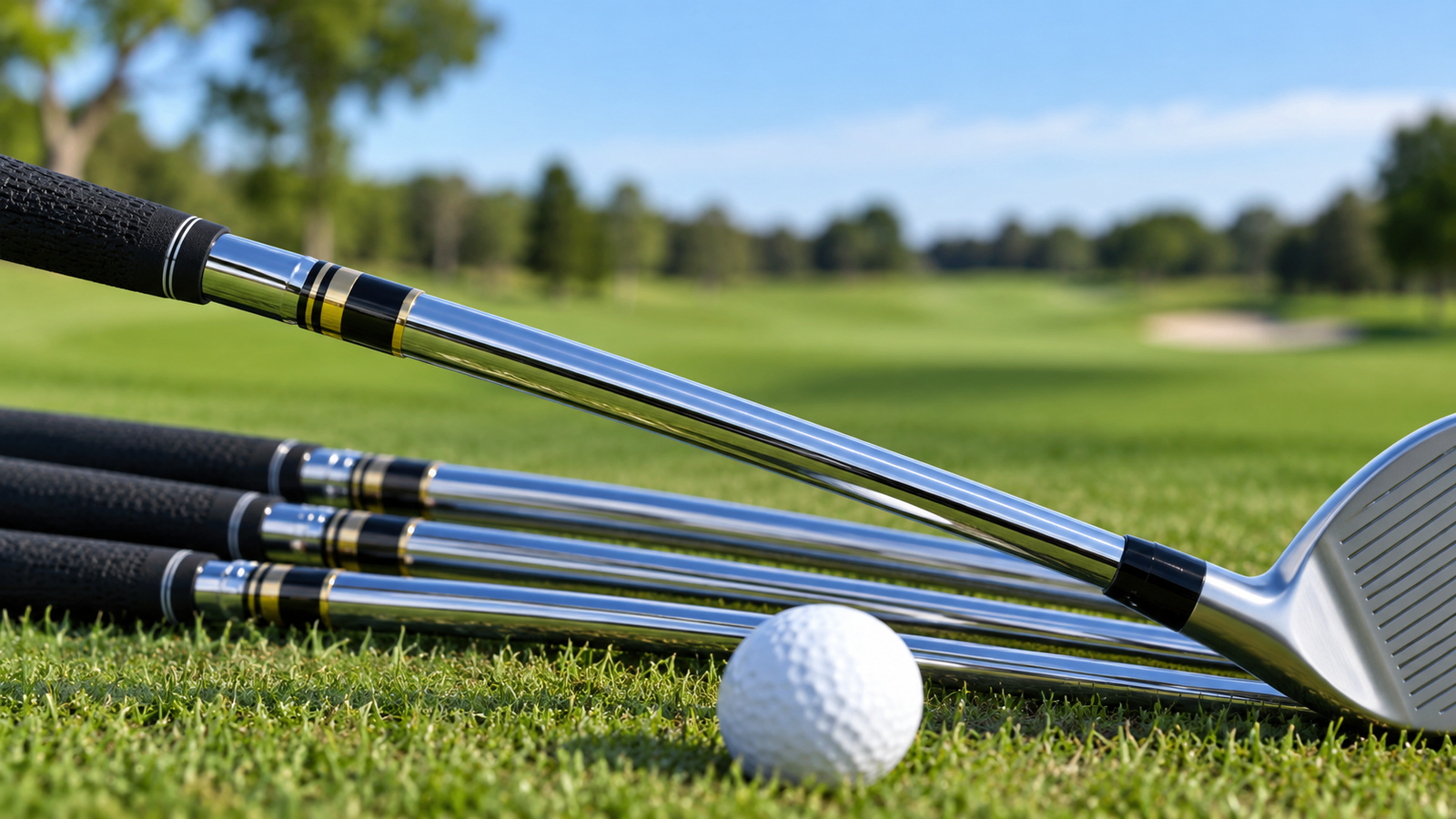
The Dynamic Gold XP R300 iron shaft weighs about 115 grams. That puts it among the lighter steel shafts in True Temper’s Dynamic Gold family, roughly 12 grams less than the classic Dynamic Gold R300, which sits near 127 grams. The number moves a gram or two depending on the iron and the tip type, but 115 grams is the figure to plan around.
That small drop in weight is the whole point of the XP. It keeps the steady, familiar feel of Dynamic Gold while shaving off enough grams to help the ball fly a little higher and a little faster. Below is what that weight means for your set, how the XP lines up against the standard shaft, and who tends to get the most out of it.
How much does the Dynamic Gold XP R300 weigh?
A Dynamic Gold XP R300 shaft weighs close to 115 grams in a mid-iron. The stiff version, the S300, comes in a touch heavier at around 117 to 120 grams. These are the raw shaft weights True Temper works from, before the shaft is trimmed and built into a finished club.
Here is how the two common flexes compare:
| Shaft | Flex | Approx. weight |
| Dynamic Gold XP | R300 (Regular) | ~115 g |
| Dynamic Gold XP | S300 (Stiff) | ~117–120 g |
For context, that makes the XP one of the lightest full-weight steel options True Temper builds under the Dynamic Gold name. It is still true steel, so it feels firmer and more stable than graphite, just without carrying the full heft of the original.
What does “R300” actually mean?
The “R300” label describes flex and sorting, not weight. The letter is the flex: R for regular, S for stiff, X for extra stiff. The number is True Temper’s weight-and-frequency sort code, a way of grouping shafts by how they bend and how stiff the tip is. So R300 is a regular-flex shaft in the 300 sort band.
Quick tip: the “300” in R300 is not a weight. It does not mean 300 grams. A Dynamic Gold XP R300 weighs around 115 grams, not 300.
You will see the same pattern across the range. Regular flex is R300. Stiff usually shows up as S300 or S400. Extra stiff is X100. Once you know the letter carries the flex and the number is just a sorting code, the whole naming system reads a lot more clearly.
XP R300 vs the standard Dynamic Gold
The main difference between the XP and the standard Dynamic Gold is weight. The XP R300 is about 12 grams lighter than the regular Dynamic Gold R300, and the stiff versions follow the same gap. Everything else, from the steel build to the low, penetrating feel, stays in the same family.
| Shaft | R300 weight | S300 weight |
| Dynamic Gold XP | ~115 g | ~117–120 g |
| Dynamic Gold (standard) | ~127 g | ~130 g |
| Weight saved with XP | ~12 g | ~10–13 g |
Twelve grams may not sound like much on paper. In an iron set of eight clubs, though, it adds up to a noticeably lighter feel through the swing. Many players find they can move the XP a bit faster, which brings a slightly higher ball flight and a little more distance, while keeping the control and consistency that steel is known for.
The standard Dynamic Gold stays the pick for players who want the heaviest, most stable steel feel and a lower flight. The XP is for the golfer who likes that feel but wants help getting the ball up and a shaft that is easier to swing all day.
Where the XP R300 sits in True Temper’s lighter lineup
The XP name now covers a small ladder of lightweight steel shafts, sorted by weight. The plain Dynamic Gold XP, the one that weighs around 115 grams, is the heaviest of them. The others drop down from there for players who want even less weight.
| Shaft | R300 weight | Best for |
| Dynamic Gold XP 95 | ~93–95 g | Slower or smoother swings wanting max height |
| Dynamic Gold XP 105 | ~100 g | A middle-ground light steel weight |
| Dynamic Gold XP (115) | ~115 g | Steel feel with a modest weight cut |
This matters when you shop, because a listing that just says “Dynamic Gold XP” usually means the roughly 115-gram model. If you want something lighter, look for the XP 95 or XP 105 in the name. Getting the weight right is the difference between a shaft that suits your swing and one that fights it. You can check the current family on True Temper’s Dynamic Gold shaft page.
Does the weight change from iron to iron?
Yes, a little. The 115-gram figure is the nominal weight for a single reference shaft. In a real set, each iron uses a shaft cut to a different length, so the actual weight in your hands shifts slightly as the clubs get shorter.
A few things affect the finished weight:
- Club length: longer irons use longer shafts, which weigh a bit more; shorter irons trim down lighter.
- Tip trimming: builders cut the tip to set flex, which removes a small amount of material.
- Tip type: the XP comes in a 0.355-inch tapered tip and a 0.370-inch parallel tip, and the parallel version can run a touch heavier.
None of this changes the headline number by much. When someone asks how heavy the XP R300 is, 115 grams is the honest, useful answer. Just know that the club on your workbench, with grip and head attached, will weigh far more than the bare shaft, since the head alone is often around 270 grams.
Weight also feeds into swingweight, which is how heavy the club feels when you swing it rather than what it reads on a scale. A lighter shaft like the XP frees a builder to add weight in the head or grip to dial in the balance you want. So two sets with the same XP R300 shaft can still feel a little different depending on how they were assembled.
Who should play the Dynamic Gold XP R300?
The XP R300 fits players who want a steel iron shaft but find the full Dynamic Gold a bit heavy or too low-flying. The regular flex suits swing speeds in the mid range, often around 80 to 90 miles per hour with a 6-iron, and smoother tempos that do not overpower a stiff shaft.
It is a strong choice if you match any of these:
- You like the solid feel of steel but want a lighter shaft you can swing freely for 18 holes.
- You want a higher, softer-landing ball flight than standard Dynamic Gold gives.
- You are moving from graphite to steel and want a gentle step rather than a heavy jump.
- You have a smooth, controlled transition rather than an aggressive one.
If your swing is faster or more aggressive, the S300 in the same XP line gives you the lighter weight with a firmer feel. And if you simply want the heaviest, most stable steel available, the standard Dynamic Gold is still there for you.
How shaft weight changes your iron shots
Shaft weight is one of the biggest levers in how an iron feels and performs, so it is worth knowing what those 12 grams do. Lighter and heavier shafts each trade one thing for another, and the right pick depends on your swing.
A lighter shaft like the XP tends to help you:
- Swing a little faster, which can add height and a few yards of carry.
- Get the ball airborne more easily, useful if your flight runs low.
- Stay fresher late in the round, since there is less mass to move.
A heavier shaft, like the standard Dynamic Gold, tends to help you:
- Keep the ball flight lower and more penetrating in wind.
- Feel the clubhead more clearly through the swing, which some players find easier to control.
- Smooth out an aggressive tempo, since the extra weight resists getting quick.
Neither is better on its own. The XP R300 lands in a useful middle spot: real steel weight and feel, with just enough taken off the top to add height and speed. That balance is why it shows up in so many stock and custom iron sets. For a sense of how much lighter the line can go, True Temper’s Dynamic Gold 105 shaft page shows a steel option that drops well under 100 grams.
If you are torn between the XP and a heavier or lighter shaft, the surest way to settle it is to hit a few. A short session on a launch monitor shows what the weight does to your height, spin, and carry, and those numbers matter more than any spec sheet. The XP R300 is a safe default for a mid-speed, smooth swing that wants a bit more air, but your own ball flight is the real judge.
Conclusion
The Dynamic Gold XP R300 weighs about 115 grams, roughly 12 grams less than the standard Dynamic Gold R300 near 127 grams. The “300” is a flex and sorting code, not a weight. Pick the XP R300 if you want the feel of steel in a lighter package that helps the ball fly higher, and go with the standard Dynamic Gold if you prefer the heaviest, lowest-flighted steel. Match the weight to your swing and the rest tends to fall into place.
Frequently asked questions
Is the Dynamic Gold XP R300 heavier or lighter than regular Dynamic Gold?
Lighter. The XP R300 weighs about 115 grams, while the standard Dynamic Gold R300 sits near 127 grams. That is roughly a 12-gram saving, which gives a slightly higher, faster ball flight.
Does the “300” in R300 mean 300 grams?
No. The 300 is True Temper’s weight-and-flex sort code, not a weight. The R stands for regular flex. A Dynamic Gold XP R300 shaft weighs around 115 grams, nowhere near 300.
Is the XP R300 good for slower swing speeds?
Yes, for many players. The regular flex and lighter weight suit mid-range swing speeds, often around 80 to 90 mph with a 6-iron, and smoother tempos that want more height without moving to graphite.
What is the difference between the XP R300 and the XP 95 or XP 105?
Weight. The plain XP R300 is about 115 grams. The XP 105 is near 100 grams and the XP 95 is around 93 to 95 grams. Same family feel, lighter as the number drops.
Is the XP R300 a good step from graphite to steel?
It can be. At about 115 grams it is lighter than full Dynamic Gold, so it feels like a gentler move into steel while still giving the firmer, more stable feel that steel is known for.
Related Articles
What Do the Numbers on Golf Balls Mean?
How Are Golf Balls Made? Inside the Real Process
How to Wash Golf Hats Without Ruining Them?
How to Throw an Anhyzer Shot in Disc Golf?