
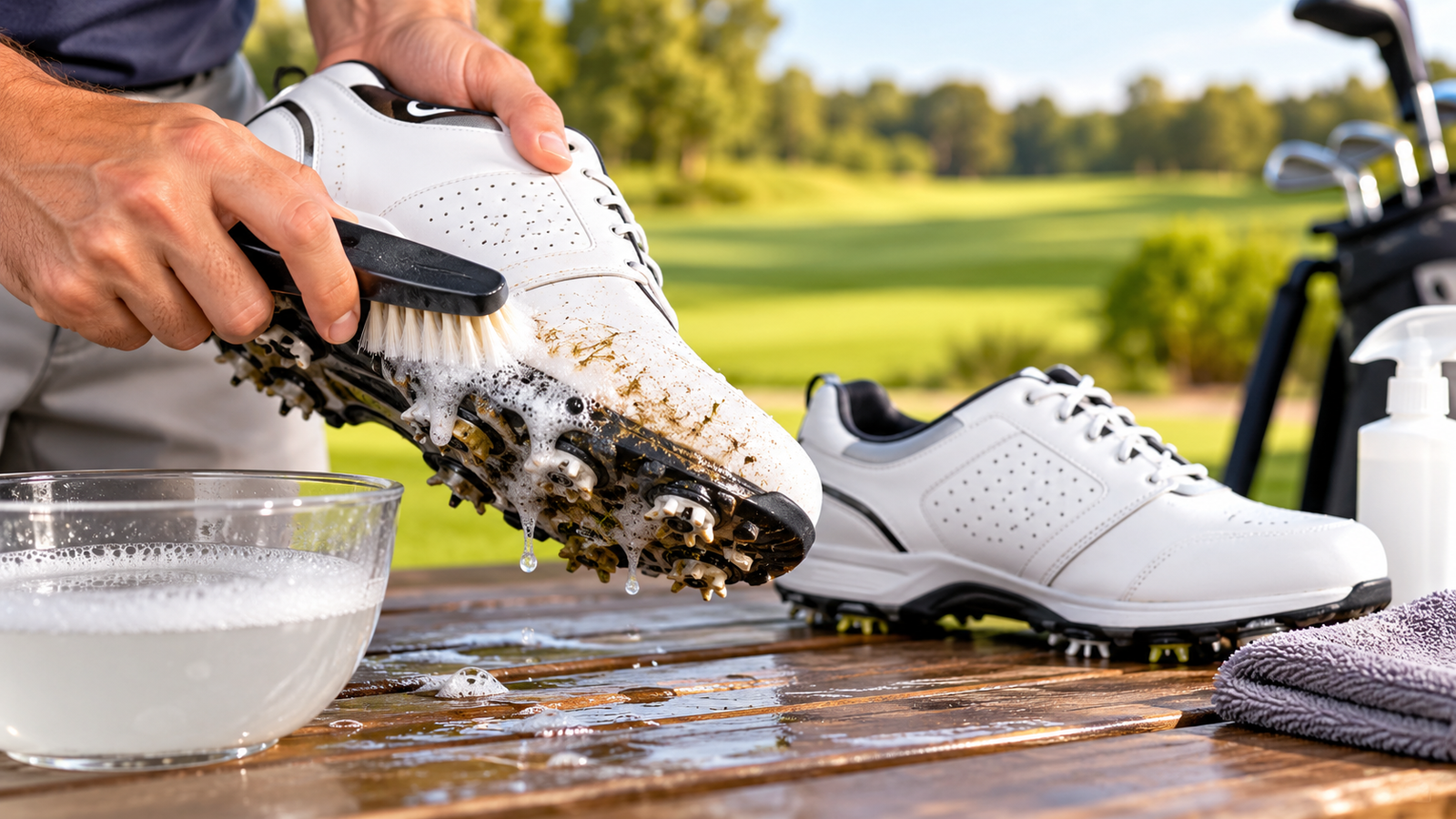
To clean golf shoes, knock off the dry dirt, wipe the uppers with a little mild soap and warm water, scrub the soles and spikes, then let them air dry away from any heat. Finish with a conditioner or a waterproof spray so the material stays soft and sheds water next time. The hands-on part takes about 15 minutes.
The real trick is timing. Clean them soon after your round, while the mud is still soft and lifts off in seconds instead of setting like cement. Caked dirt is not just ugly. It holds moisture against the material, and that damp is what cracks leather, warps mesh, and leaves the smell you notice when you open your bag. A quick clean after each round keeps a $150 pair playing and looking good for years instead of one wet season.
What you need?
You almost certainly have most of this at home already, so there is no need to buy a special kit:
- A soft brush or an old toothbrush
- Mild soap or a drop of dish soap
- Warm water (not hot)
- Two microfiber cloths or soft rags
- A dry towel
- Leather conditioner for leather shoes, or a waterproof spray for the rest
- Old newspaper or paper towels for stuffing
Skip the harsh stuff. Bleach, strong degreasers, and stiff wire brushes strip the color and tear at the seams. A soft brush and a drop of soap do the same job without the damage.
How to clean golf shoes step by step?
Work through these steps in order. They suit almost any pair, and the sections after this one cover what changes for different materials and soles.
- Take off the laces. Pull them out so you can reach the tongue and the eyelets. Wash white laces in a bowl of soapy water, or swap them for a fresh pair if they are stained for good.
- Brush off the loose dirt. Hold the shoes over a bin or the grass and brush the dried mud, grass, and sand off the uppers and the sole. Getting the dry stuff off first means you are not just smearing it around later.
- Mix your cleaner. Add a small squirt of mild soap to a bowl of warm water. You want it lightly soapy, not a bowl full of suds.
- Wipe the uppers. Dip a cloth in the solution, wring it out so it is damp and not soaking, and wipe the uppers in small circles. Use the toothbrush on the stitching, the seams, and any ground-in marks.
- Rinse the soap off. Go over everything again with a second cloth dipped in clean water. Leftover soap dries into a dull film, so this step matters more than it looks.
- Clean the soles and spikes, covered in the next section.
- Blot and stuff. Press a dry towel over the shoes to pull out the surface water, then stuff them with newspaper or paper towels to hold their shape while they dry.
- Air dry, then treat. Leave them to dry fully, then add conditioner or waterproof spray. Both are covered below.
It reads like a lot written out, but once you have done it twice the whole thing takes about as long as cleaning a pair of trainers.
Quick tip: the single most useful habit is a 60-second wipe with a damp cloth right after your round, before the mud dries. It turns the big cleans into an easy job.
Cleaning the soles and spikes
The bottom of the shoe collects the worst of it, so give it a proper scrub. Turn the shoe over and work the brush into the tread and around each spike to clear the packed mud and grass. A wooden tee or a toothpick is handy for digging clumps out of the tight grooves.
If your shoes have soft spikes, this is the moment to check them. Worn cleats lose their grip and can put you on the ground on wet grass or a slope. Soft spikes are made to be replaced, and a fair guide is every 15 to 20 rounds, or once the little claws look flattened and rounded off. They screw in and out with a cheap plastic wrench, and Softspikes’ installation guide walks through the fast-twist and thread types if you are not sure which yours are.
Spikeless shoes have molded rubber nubs instead of removable cleats, so there is nothing to swap out. Just brush the tread clean and check that the nubs are not worn smooth. Once they are, the shoe has reached the end of its grippy life and it is time for a new pair.
While you are down there, clear the drainage ports if your shoes have them, the little holes along the sole that let water escape. Mud plugs them fast, and a clogged port keeps water sitting inside the shoe instead of draining away.
How to clean each type of golf shoe?
The basic steps stay the same, but the upper material decides how gentle you need to be.
| Material | How to clean it | Watch out for |
| Leather | Damp cloth with mild soap in light circles, then a leather conditioner once it is dry | Never soak it, and skip harsh cleaners that dry it out |
| Synthetic | Soft brush with the soapy solution, then wipe with a clean damp cloth | Rinse well so no soap film is left behind |
| Mesh or knit | Soft brush and a light soapy touch, dabbing rather than scrubbing | Do not soak it, since too much water pulls the shoe out of shape |
Leather needs the most care. It is skin, so it wants moisture put back after every clean, which is exactly what the conditioner does and why leather that is only ever wiped starts to crack. Mesh and knit uppers have the opposite problem. They drink up water fast, so keep them damp at most and let the paper towels inside hold the shape as they dry.
Not sure what yours are made of? A smooth, slightly shiny upper that creases when you bend it is usually leather. A dull, even surface is synthetic, and anything with tiny holes or a woven pattern is mesh or knit. Plenty of newer shoes mix them, with a leather or synthetic toe and a knit body, so treat each part the way its material asks: gentle soap on the panels, and conditioner only on the leather bits.
How to remove grass stains and scuffs?
Grass and mud are the two marks you fight most on golf shoes, and both come off if you catch them early. For a fresh grass stain, dab the spot with your soapy cloth and a little extra soap, work it gently with the toothbrush, then rinse. On white shoes, a paste of baking soda and a few drops of water lifts green marks well. Rub it in, leave it a couple of minutes, then wipe it away.
Black scuff marks from a cart or a bag usually give up to a magic eraser used with a light touch, no hard scrubbing needed. Dried mud is easier than it looks: let it dry fully, then knock it off with the brush, because scrubbing wet mud only grinds it deeper into the material. Whatever the stain, deal with it before your final rinse so you are not leaving cleaner sitting on the shoe.
How to dry golf shoes the right way?
Air dry them at room temperature, and keep them away from every heat source. This is the step most people get wrong, and it is the one that quietly ruins shoes. A radiator, a hairdryer, a hot car, or direct sun feels faster, but the heat cracks leather, unsticks the glued seams, and warps the sole out of shape.
A full dry usually takes 12 to 24 hours, depending on how wet they got. Stuff them with newspaper or paper towels and change the paper once it turns damp to speed things along. Pull the insoles out and dry them separately so nothing stays wet underneath. If you play often, a second pair to rotate means you never have to force-dry a soggy pair before a round.
How to get the smell out of golf shoes?
The smell comes from bacteria living in trapped sweat, so the fix is drying plus a little baking soda. Once the shoes are dry, tip a spoonful of baking soda into each one, leave it overnight, and shake it out in the morning. It draws out the moisture and takes the odor with it.
For shoes that need more help, pull the insoles after every round so air can reach underneath, and never stack damp shoes in a closed bag. A cedar shoe insert works well too, since cedar soaks up damp and leaves a clean smell behind. A quick spritz of shoe disinfectant spray after a wet round helps as well, killing the bacteria before it builds up. Washing the insoles in the same soapy water and drying them fully often solves the problem on its own.
How to protect and store your golf shoes?
Once the shoes are clean and fully dry, seal the work in. On leather, rub a thin coat of conditioner in with a cloth and buff it off after about ten minutes so the material stays soft. On synthetic and mesh, mist an even coat of waterproof spray from around a foot away so water beads up instead of soaking in next time. FootJoy’s shoe care page lists which product suits each of their uppers if you want to match it exactly.
Store them somewhere cool and dry, and get them out of the car trunk, where heat and cold swing all day long. Loosen the laces before you put them away so the shoe can relax back to its natural shape instead of staying pinched. Shoe trees or a fresh ball of newspaper inside will hold that shape between rounds, and looked after this way, a good pair easily lasts several seasons.
How often should you clean golf shoes?
Give them a quick wipe after every round and a full clean every few weeks, or any time they come home muddy. The after-round wipe is the habit that matters most. A minute with a damp cloth stops dirt from drying into the material, and it is the difference between a shoe that ages well and one that looks tired by mid-season. Small and often always beats rare and hard.
Conclusion
Cleaning golf shoes comes down to a simple routine: brush off the dry dirt, wipe the uppers with mild soap and water, scrub the soles and spikes, air dry away from heat, then condition or waterproof. Add a fast wipe after every round and a full clean every few weeks. Handled this way, your shoes keep their grip, shed water, and last for years instead of falling apart after one wet season.
Frequently asked questions
Can you put golf shoes in the washing machine?
It is best not to. A machine cycle can pull the seams apart, warp the sole, and strip the waterproofing, and it voids the warranty on many pairs. Hand cleaning with a brush, mild soap, and water is safer and works just as well.
How do you clean white golf shoes?
Clean them the same way, then treat any marks with a little extra whitener or a magic eraser on scuffs. Wash or replace the laces, since white ones yellow fastest. Finish with a waterproof spray to help them resist stains next round.
How often should you replace golf spikes?
Soft spikes usually last about 15 to 20 rounds. Swap them sooner if the cleats look flattened or you feel yourself slipping on wet or sloped ground. They twist out with a cheap wrench and cost only a few dollars a set.
How do you dry golf shoes fast without damaging them?
Stuff them with newspaper or paper towels, pull out the insoles, and set them in a breezy spot at room temperature. Change the paper when it gets damp. Never reach for a hairdryer, radiator, or hot car, since heat cracks and warps the material.
Can you clean suede or nubuck golf shoes the same way?
No. Suede and nubuck do not like water, so use a dry suede brush and a suede eraser instead of soap and a wet cloth. A suede protector spray afterward keeps them looking right.
Related Articles
What Golf Balls Do Pros Use? The Models Behind the Wins
How Much Do Golf Clubs Weigh? A Clear Guide by Club Type
Does Hoka Make Golf Shoes? What to Know Before You Tee Off
How to Wash Golf Grips: Easy Step-by-Step Guide
[…] How to Clean Golf Shoes Without Wrecking Them? […]
[…] How to Clean Golf Shoes Without Wrecking Them? […]