
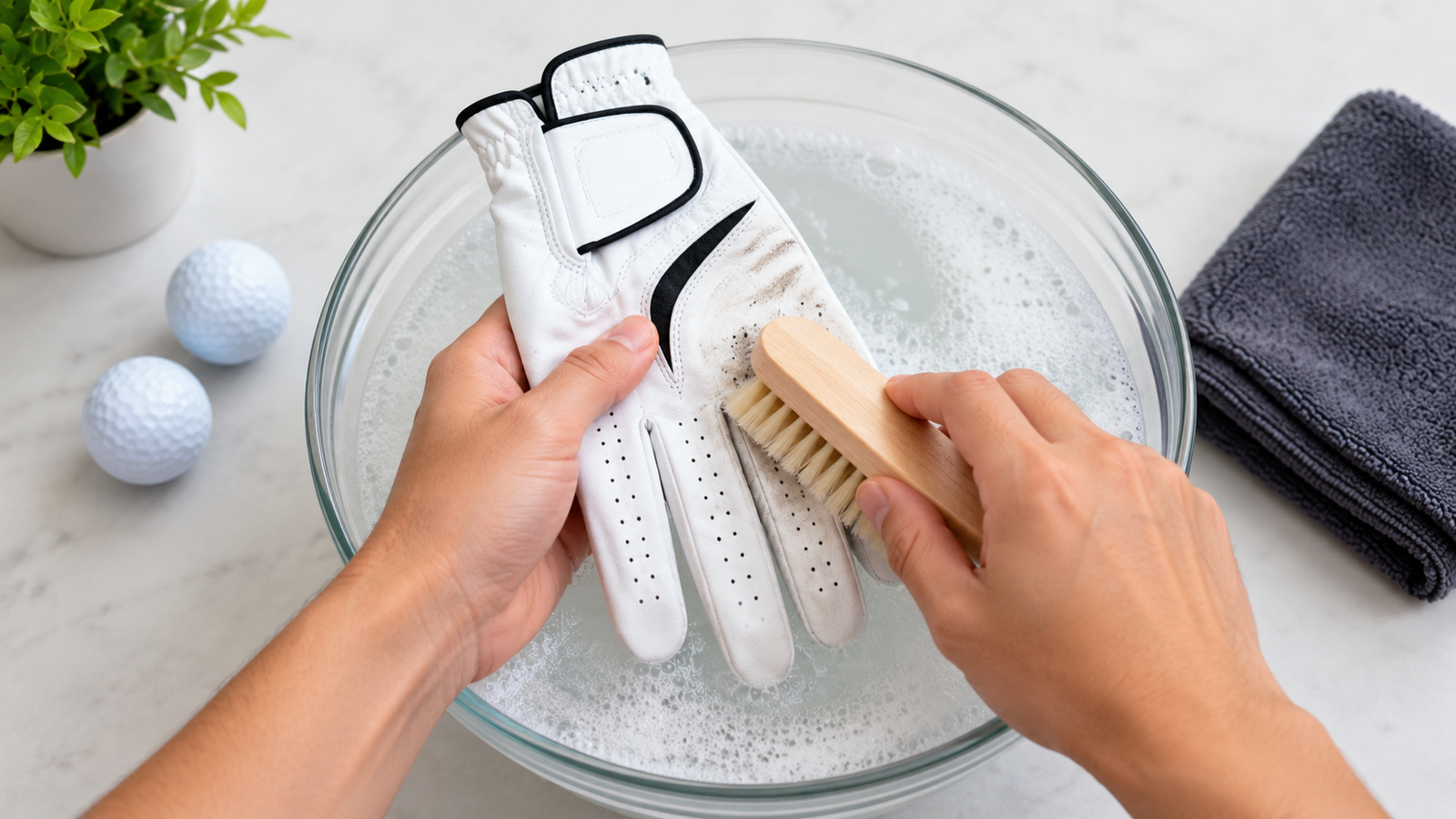
Wash a golf glove by hand, in cool water, with a single drop of mild soap, then press it in a towel and let it air dry flat, away from any heat. That is the whole method for leather. Synthetic gloves can also take a cold, gentle machine cycle if you turn them inside out and use a mesh bag.
The washing is the easy half. What actually kills gloves is too much water and too much heat, so the drying matters more than the scrubbing.
First, check what your glove is made of
The material decides everything that follows, and it is usually printed on the inside of the cuff or on the packaging.
Most premium gloves use cabretta, a very thin sheepskin leather. A cabretta glove like the Titleist Players, which sells for about $31, is built for feel, not for durability. The leather is soft because it still holds its natural oils, and water is what carries those oils out.
Synthetic gloves are made from man-made fabrics. They cost less, last longer, shrug off rain, and put up with far rougher treatment in the sink.
Plenty of gloves are both. A leather palm with a mesh or synthetic back is very common. Treat a mixed glove as leather, because the leather is the part that gets damaged.
| Glove type | Hand wash | Machine wash | Dry |
| Cabretta leather | Damp cloth only, never soak | No | Flat, room temperature |
| Synthetic | Yes, cool water | Yes, cold and gentle, in a mesh bag | Flat, room temperature |
| Leather palm, mesh back | Damp cloth only | No | Flat, room temperature |
| Rain or winter gloves | Yes, cool water | Check the cuff label first | Flat, room temperature |
How to wash a leather golf glove?
You need cool water, a mild soap, two soft cloths and a towel. Baby shampoo works well because it is gentle and rinses clean. Skip anything with bleach, solvents or degreasers.
- Knock off the dry dirt first. With the glove dry, brush the palm and fingers with a soft brush or an old toothbrush. Sand and grit scratch the leather if you rub them in wet.
- Mix your water. Half a bowl of cool water and one drop of soap. Cool, not warm. Warm water opens up the leather and pulls the oils out faster.
- Wet the cloth, then wring it out hard. You want it damp, not dripping. This is the step people skip, and it is the difference between a clean glove and a ruined one.
- Wipe in small circles. Start on the palm and heel where the grime sits, then the fingers and the back. Work on stains a little at a time instead of soaking them.
- Rinse with a second cloth. Plain cool water, wrung out the same way, wiped over the whole glove until the soap is gone. Leftover soap dries sticky and kills the grip.
- Press, never twist. Fold the glove inside a dry towel and press down with your palms. Wringing it stretches the shape and you cannot get it back.
- Reshape it. Slip it onto your hand for two or three seconds, flatten the fingers, then take it off and lay it out.
Keep the glove damp, never wet. If water is running off it or soaking through the perforations, you have used far too much.
Can you put a golf glove in the washing machine?
A synthetic glove, yes. A leather one, no.
For synthetics, turn the glove inside out so the hook-and-loop tab cannot snag and chew up the fabric, put it in a mesh laundry bag, and run a cold delicate cycle with a small amount of mild detergent. No fabric softener, no bleach, no hot water. Then it comes straight out and dries flat.
Leather is a different story. Cabretta is thinner than the leather on a wallet or a boot, and a wash cycle strips the oils that make it feel good in the first place. It comes out of the machine looking fine and dries into something closer to cardboard. One cycle is usually enough to finish a glove off, so there is no careful setting that makes this safe.
Drying is where gloves are saved or lost
Lay the glove flat on a dry towel, somewhere with moving air and no direct sun. Room temperature only. Give it a full day; depending on humidity it can take anywhere from 12 to 24 hours to dry all the way through.
Check on it after about five minutes, put it on your hand, flatten the fingers and smooth the palm, then lay it back down. That one small step keeps the fingers from drying curled.
Everything warm is off the list. Radiators, hairdryers, tumble dryers, a sunny windowsill and the dashboard of a hot car all do the same thing: they drive the moisture out too fast and leave the leather shrunken, stiff and prone to cracking. Sunlight breaks down leather fibres on its own, so shade is not optional.
Once a leather glove is completely dry, a very small amount of leather conditioner rubbed in with a cloth helps it stay soft. Use less than you think you need. Too much leaves a slick film on the palm, which is the opposite of what you want from a glove.
Rescuing a glove that has already gone hard
A crunchy glove is usually dried sweat. Salt builds up in the leather, locks the fibres together and turns a soft glove into a shell.
You can get some of it back, and this is the one time a short soak is worth the risk on a glove you were about to throw out anyway. Put it in cool water with a little mild soap for about 10 to 15 minutes, and gently flex and bend it while it is in there to break up the salt. Rinse it in clean cool water, press it in a towel, and dry it exactly as described above.
It will come back softer. It will not come back new, and if the palm has already gone shiny and smooth, nothing brings the texture back.
How often should you wash a golf glove?
Wipe it, often. Wash it, rarely.
A quick wipe with a damp cloth after a round takes ten seconds and stops sweat and dirt from building up into a crust. A proper clean every few rounds, or whenever the glove looks obviously dirty, is plenty. Washing a leather glove after every single round just wears it out faster, because each wash takes a little more of the oil with it.
Habits that keep the glove clean in the first place
Most of the work happens on the course, not at the sink.
- Take the glove off when you are not hitting. Between shots, on the cart, on the green.
- Never scrunch it into a pocket. Lay it flat in a bag pocket or clip it to the outside so air can get at it.
- Use a towel for sweaty hands and wet balls. A glove is not a rag, and salt water is the worst thing you can put on one.
- Take the glove off before you fish a ball out of a water hazard or use a ball washer.
Rotating two or three gloves through a round makes a real difference too, because each one gets time to dry out properly instead of staying damp for four hours straight.
Fit matters more than most golfers expect. Around half of all golfers are wearing the wrong glove size, and most of those are wearing one that is too big. A loose glove slides against your hand, and that rubbing wears the palm out long before dirt ever does. The wear pattern tells you what is going on: palm wear points to the club slipping or a grip held in the palms rather than the fingers, heel wear points to re-gripping at the top of the swing, and thumb wear points to a thumb stretched too far down the shaft. FootJoy’s glove fitting page has the full wear chart and a printable measuring guide if you want to check your size properly.
When to stop washing and buy a new one?
Washing fixes dirt. It does not fix wear. Replace the glove when you see a hole or thin patch at the heel of the palm, when the leather has gone shiny and slick where you grip, when seams start pulling apart, or when it crackles after drying no matter how gently you treat it.
At around $31 for a premium leather glove and less for a synthetic, there is a point where cleaning is just delaying the obvious. A clean glove that has lost its grip is still a glove you cannot trust.
Conclusion
Use a damp cloth, a drop of mild soap and cool water on leather, or a cold delicate cycle in a mesh bag for synthetics. Press the water out in a towel, reshape the glove on your hand, and let it dry flat at room temperature for a full day. Done right, the glove comes back soft, tacky and the same size it was. Wipe it after every round and you will rarely need to do more.
Frequently asked questions
Can I wash a golf glove in the dishwasher?
No. Dishwashers combine hot water, strong detergent and a heated dry cycle, which is the worst possible mix for leather and hard on synthetics too. Hand washing takes less time and will not shrink the glove.
Why does my golf glove get hard after it dries?
Dried sweat is the usual cause. Salt left in the leather stiffens the fibres, and drying near heat makes it worse. Washing gently and drying flat at room temperature keeps it soft.
Can I use leather conditioner on a golf glove?
Yes, sparingly, and only once the glove is completely dry. Rub a tiny amount into a cloth and work it over the palm. Too much conditioner leaves a greasy film that ruins your grip.
Should I wash my golf glove after every round?
No. Wipe it with a damp cloth after each round and give it a full clean every few rounds or when it looks dirty. Frequent washing strips the natural oils and shortens the life of leather.
Is it safe to wash a rain glove or a winter glove?
Usually yes, since most are synthetic. Turn it inside out, use cold water and mild detergent, and check the label at the cuff first. Always dry it flat, never in a tumble dryer.
Related Articles
How to Measure Golf Shaft Length (Step-by-Step Guide)
What Hand Do You Wear a Golf Glove On? (Left vs Right)
How Much Does a Golf Ball Weigh?
How Many Clubs Are in a Golf Bag? (14-Club Rule)
[…] How to Wash Golf Gloves Without Wrecking Them? […]
[…] How to Wash Golf Gloves Without Wrecking Them? […]
[…] How to Wash Golf Gloves Without Wrecking Them? […]
[…] How to Wash Golf Gloves Without Wrecking Them? […]