
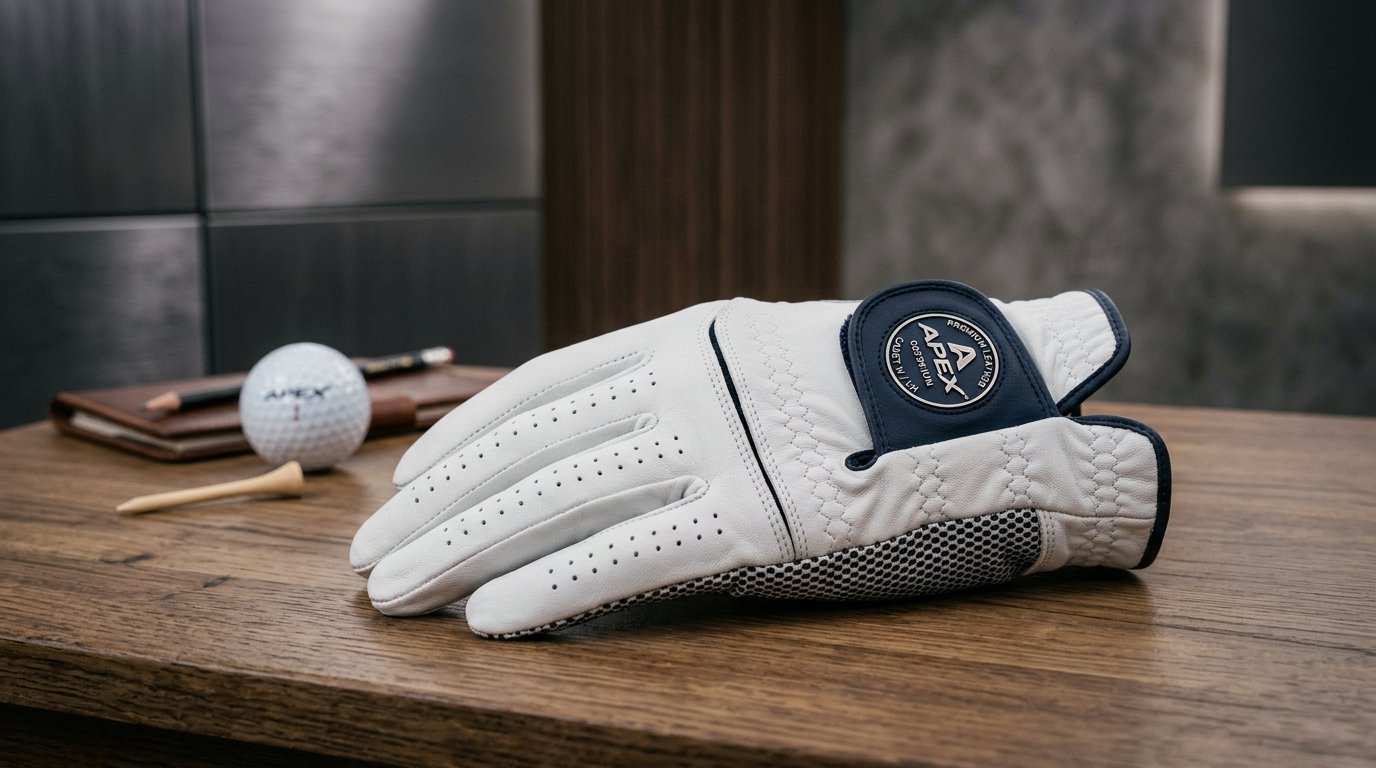
If you’re right-handed, your golf glove goes on your left hand. That’s your lead hand, the one that sits at the top of the grip and does most of the work holding the club steady through the swing. Get the hand right, then the size and the material, and a glove stops being an afterthought and starts doing its job: better grip, fewer blisters, more control when your hands get sweaty on the back nine.
It sounds like a small detail, but it trips up a lot of new golfers shopping online, where a glove is often labeled by which hand it fits rather than by which golfer it suits. Get that label wrong and you end up with a glove you can’t actually wear.
Which hand does a right-handed golfer wear the glove on?
Left hand. A right-handed swing has the left hand on top of the grip, closest to your body, and the right hand below it, closer to the clubhead. That top hand carries most of the pressure and steers the clubface through impact, so it’s the one that benefits from a glove’s grip and cushioning. The bottom hand mostly stabilizes, which is why almost nobody wears two gloves.
If you shop online and see a glove listed as a “left hand glove,” that’s the one you want. Some sites instead label gloves by the golfer they suit, so you might see “for right-handed golfers” printed right on the product page. Either label points to the same glove, worn on the same hand. Left-handed golfers simply flip everything: their glove goes on the right hand, and retailers stock far fewer of those, since right-handed players make up most of the market.
In a shop, this rarely causes confusion because you can just try the glove on. Buying online is where the mix-up happens, so it’s worth double-checking the product listing before you check out, especially if you’re ordering a specific brand or color for the first time.
Why the lead hand does the heavy lifting?
Your left hand grips higher on the club and controls the clubface angle from backswing to follow-through. It absorbs more friction than the trailing hand, especially in the last few inches before impact, when grip pressure and clubhead speed both spike. A glove adds a layer of tacky material between your skin and the grip, which cuts down on slipping and the small twisting that causes blisters and calluses over a season of play.
This is also why one glove is the norm rather than two. Your right hand, the trailing hand for a right-handed golfer, does less gripping work and more guiding, so most golfers leave it bare for feel. Some players do wear a glove on both hands for extra grip in wet weather or heavy sweat, and that’s a matter of preference rather than a rule.
Finding your correct glove size
A glove that’s the wrong size undoes most of the benefit of wearing one. Too loose and it bunches at your fingertips or palm, killing feel. Too tight and it restricts your hand and wears out fast at the seams.
Two measurements get you there:
- Hand circumference. Wrap a tape measure around your left palm, just below the knuckles, not including the thumb. Keep it snug but not pulled tight.
- Middle finger length. Measure from the base of your palm at the wrist crease to the tip of your middle finger.
Circumference alone gets most golfers close:
| Hand circumference | Typical men’s size |
| 7 to 7.5 inches | Small |
| 7.5 to 8 inches | Medium |
| 8 to 8.5 inches | Large |
| 8.5 to 9 inches | Extra large |
If your fingers are shorter and your palm wider than that chart suggests, a cadet size is built for exactly that shape, with a shorter finger cut and a roomier palm than a standard size in the same letter.
FootJoy’s official sizing chart cross-references both measurements for a more precise fit than circumference alone, and it’s worth the two minutes if you’re ordering online without trying gloves on first. If you land right between two sizes, sizing down usually beats sizing up. Leather stretches slightly with wear, and a glove that starts snug will mold to your hand rather than go loose after a few rounds.
Once the glove is on, do a quick fit check before you buy a second one in the same size. Make a fist and flex your fingers: you shouldn’t feel the seams pull tight or see gaps opening at the knuckles. Lay your hand flat and check the fingertips. If there’s loose material bunching past the tip of each finger, the glove is too long even if the palm feels right, and that’s usually a sign to try a cadet cut instead of a smaller standard size.
Leather, synthetic, or a hybrid
Material changes how a glove feels, how long it lasts, and what it costs.
Cabretta leather, made from sheepskin, is the standard on tour and in most premium gloves. It’s thin enough to transmit real feedback from the grip to your hand, and it develops a tacky, second-skin feel as it breaks in. The tradeoff is durability in wet weather: leather absorbs moisture, softens, and wears faster when it’s damp, and it needs to air dry flat rather than get stuffed back in your bag.
Synthetic gloves, usually a polyurethane or microfiber blend, trade some of that feel for durability and weather resistance. They hold their grip better when wet, machine wash more easily on some models, and cost noticeably less. Under Armour’s glove buying guide is a useful reference if you want to compare construction across material types before you buy.
Hybrid gloves put cabretta leather on the palm, where grip and feel matter most, and synthetic panels on the back of the hand and between the fingers, where stretch and breathability matter more. For most golfers who play regularly in mixed weather, a hybrid is the easiest all-around choice, since it doesn’t ask you to give up much feel to gain the extra wear.
Price tracks material fairly closely. Full cabretta gloves from premium brands often run into the mid twenty dollar range each, mid-tier cabretta or hybrid gloves land in the low teens, and budget synthetic gloves can cost under ten dollars. If you play a few times a month, that price gap matters less than it looks, since a cheaper glove that wears out twice as fast can end up costing about the same over a season.
Matching the glove to the weather you actually play in
A glove built for a dry summer afternoon isn’t the right call for a soggy morning round.
Rain gloves are made from a textured synthetic that grips better the wetter it gets, which is the opposite of how leather behaves. They’re often sold in pairs since some golfers wear one on each hand in a downpour, since a bare trailing hand loses grip fast when it’s slick.
Cold weather gloves are thicker and sometimes insulated, built to keep your hands warm between shots rather than to grip the club while you’re actually swinging. Many golfers slip these off before addressing the ball and use them only to walk between shots.
If you play mostly in one climate, one good glove in the right material covers you. If your course sees real seasons or sudden weather, it’s worth keeping a rain glove in your bag alongside your usual one.
How long a glove lasts, and when to replace it?
A cabretta leather glove typically holds up for somewhere between 5 and 10 rounds of regular play before it loses its grip and starts to feel thin at the palm. Synthetic and hybrid gloves tend to run longer, often 15 to 20 rounds, since the panels resist wear better than pure leather.
A few signs tell you it’s time for a new one regardless of the count:
Watch for: a shiny or thin patch on the palm, stretched-out fingers or a loose fit that wasn’t there when the glove was new, and a noticeable drop in tackiness even right after you’ve cleaned it.
Practice range sessions wear a glove down faster than course rounds, since you’re making far more swings per hour than you would playing 18 holes. Many golfers keep an older glove for the range and save a fresher one for the course.
Getting more life out of the glove you have
A few habits stretch the life of any glove, leather or synthetic:
- Take it off between shots on the course, rather than leaving it on your hand for the full round.
- Let it air dry flat after a sweaty or wet round instead of balling it up in your bag.
- Keep two gloves in rotation so each one gets time to dry out fully between uses.
- Avoid gripping the club too close to the butt end, which puts extra strain on the same spot in the glove every swing.
Conclusion
A right-handed golfer wears the glove on the left hand, the hand doing most of the gripping and steering through the swing. Beyond that, the right choice comes down to a correct size, a material that matches how and where you play, and swapping the glove out before it stops doing its job. Get those three right and the glove disappears into your setup instead of becoming something you think about mid-round.
Frequently asked questions
Do right-handed golfers really only need one glove?
Yes, for most golfers. The left hand does the bulk of the gripping work, so that’s the one that benefits most. Some players add a second glove for wet weather or heavy sweating, but it’s a preference, not a requirement.
What if I’m right-handed but the glove feels tight on my left hand?
Try a half size up, or a cadet cut if your fingers are shorter than average for your palm width. A glove that’s tight across the knuckles when your hand is flat is a sizing problem, not something that breaks in.
Can a right-handed golfer wear a left-handed glove by mistake?
It’s an easy mix-up when shopping online. A “left hand glove” is the one right-handed golfers wear, since it fits the left hand. A “right hand glove” fits the right hand and is meant for left-handed golfers.
Is a more expensive leather glove actually better than a cheaper synthetic one?
For feel and grip in dry conditions, yes, most golfers notice the difference. For durability, wet weather, and price, synthetic often wins. Neither is objectively better, they suit different priorities.
How do I know my golf glove size without a size chart nearby?
Measure your left palm circumference just below the knuckles. Roughly 7 to 7.5 inches is a small, 7.5 to 8 a medium, 8 to 8.5 a large, and 8.5 to 9 an extra large, with cadet sizing available if your fingers run shorter than that palm width suggests.
Related Articles
What Is Golf Club Lie Angle? Definition & Fitting Guide
How to Wash Golf Clubs: A Complete Step-by-Step Guide
What to Wear to a Golf Tournament as a Spectator?
What Is the Most Expensive Golf Ball?
[…] Golf Glove for Right-Handed Golfers: How to Get the Right Fit […]