
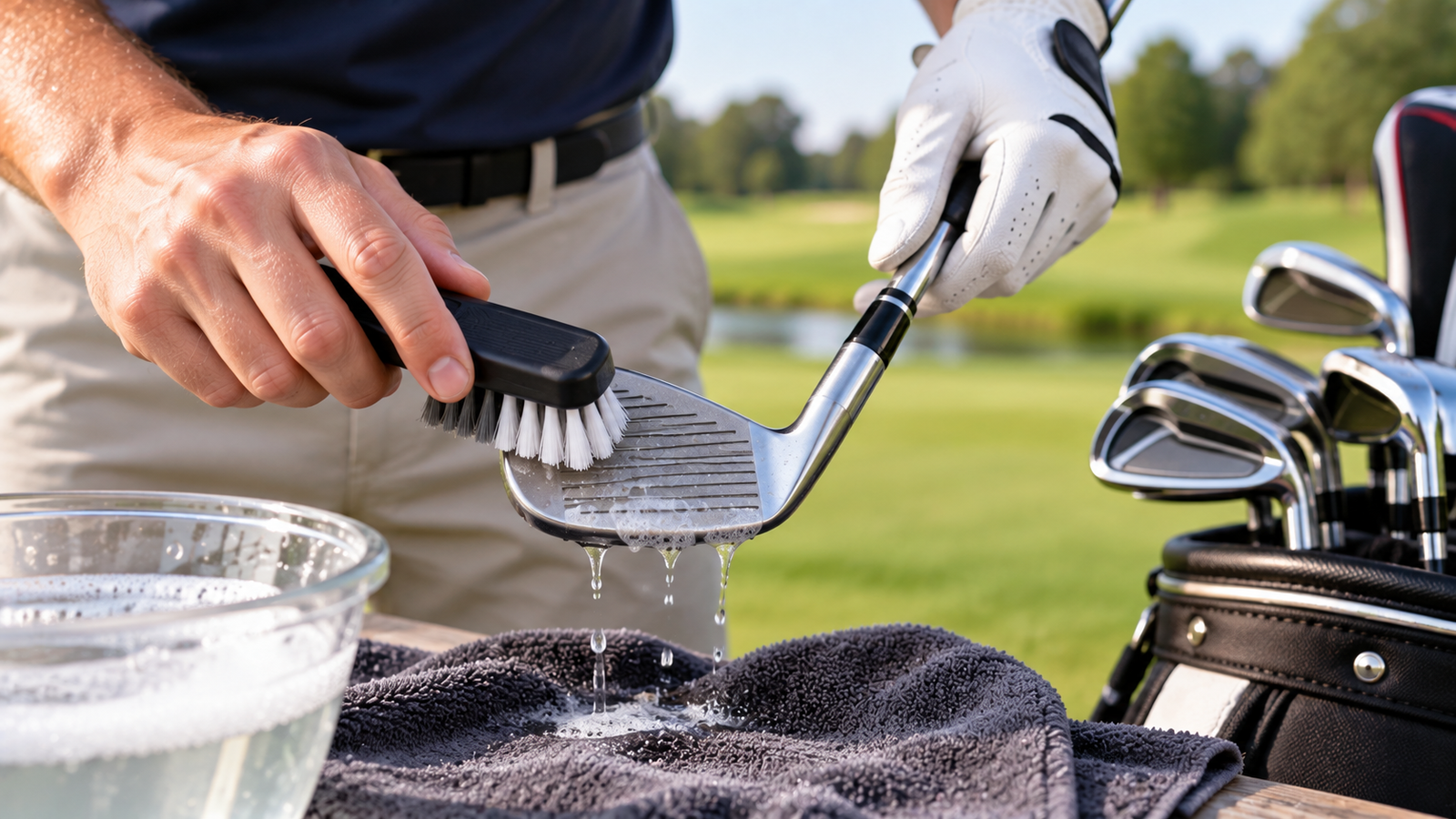
Wash your irons and wedges by soaking just the heads in warm water with a little mild dish soap, scrubbing the grooves with a soft brush, then rinsing and drying them right away. Woods, hybrids, and your putter get wiped down instead of soaked, since sitting in water can loosen the glue that holds the head to the shaft. Grips need their own quick scrub in soapy water too, since a slick grip costs you control just as much as dirty grooves cost you spin.
Here’s how to do all three properly, plus how often to do it and what to avoid.
What you need?
- A bucket or a sink
- Warm water, not hot, since heat can soften grip material and glue
- A few drops of mild dish soap
- A soft-bristled brush; an old toothbrush works fine
- A tee or a golf-specific groove tool for packed-in dirt
- A microfiber cloth or soft towel
- A second dry towel to lay the clubs on
How to wash your irons and wedges?
- Mix warm water with a small squeeze of dish soap in a bucket, enough to raise light suds. You don’t need much soap, a teaspoon or two per few liters does the job.
- Lower the clubheads into the water so only the head sits below the surface. Keep the ferrule, hosel, and shaft out of the water. Let the heads soak for five to ten minutes to loosen packed-in dirt and grass.
- Take one club out at a time and scrub the face, grooves, sole, and back with the soft brush. Work along the direction of the grooves rather than across them. If dirt is stuck deep in a groove, run a tee or a groove tool along the channel first, then brush it out.
- Rinse the head under clean running water to clear away soap and loosened dirt, then dry it right away with a towel. Don’t let clubheads air dry, since water sitting in the grooves and on the face invites rust, especially on wedges with a raw, unplated face.
How to clean woods, hybrids, and your putter?
Drivers, fairway woods, hybrids, and most putters should never go in the water. Their heads are often hollow, built from multiple materials, and held together with adhesive at the hosel and around any weight ports. Water that gets into a seam or a screw hole can sit there and cause problems you won’t see until the club fails on you.
Instead, dampen a cloth in the same soapy water and wipe the crown, face, and sole. Use the soft brush dry or lightly damp to work grass and dirt out of the shallow grooves on the face, then wipe the head dry immediately. Pay extra attention to adjustable hosels and weight ports on modern drivers and fairway woods. Wipe around the screws and openings rather than letting water pool there, and dry that area first.
How to clean your grips?
Grips take more direct wear than any other part of the club, since they’re the one piece you touch on every swing. Sweat, sunscreen, and dirt build up on the surface and make the grip slicker over time, which forces you to hold on tighter and can throw off your swing.
Mix another small batch of warm, soapy water, separate from the bucket you used for the heads. Wet the brush and scrub each grip from the top to the butt end, working all the way around. Rinse the soap off under a light stream of water, holding the club with the grip end angled down so water runs away from the shaft rather than into it. Pat the grip dry with a towel and let it finish air drying before you put the club away. Golf Pride’s own care and maintenance guidance calls for the same mild soap, water, and soft-brush approach, done every few rounds rather than left until a grip feels slick.
Never fully submerge a grip. Dunking it risks pushing water past the butt end and into the shaft, where it can sit against metal and cause corrosion you won’t notice until the club starts to feel loose. If a grip is cracked, split, or worn smooth, cleaning it won’t fix the problem. That grip needs to be replaced.
Cleaning method by club type
Different clubs need different treatment, and mixing them up is the fastest way to cause damage. Here’s the quick reference:
| Club type | Can you soak it? | Best method |
| Irons and wedges | Yes, heads only | Soak 5-10 minutes, scrub grooves with a soft brush, rinse, dry |
| Drivers, fairway woods, hybrids | No | Wipe with a damp cloth, brush the face grooves dry or lightly damp |
| Putter | No | Wipe with a damp cloth, especially around the face insert and any alignment aids |
| Grips | No, rinse only | Scrub with soapy water, rinse with the hole angled down, dry with a towel |
Cleaning the shaft and ferrule
The shaft and the ferrule, the small plastic or composite collar that sits where the shaft meets the head, rarely get the same buildup as the clubface, but they still pick up grip residue, dirt, and the occasional smear of turf. Wipe the shaft down with a damp cloth rather than dunking it, working from the grip down to the head. Graphite shafts can handle a quick wipe with mild soap and water, but steel shafts with any exposed raw sections can rust if you leave them wet, so dry them the same way you dry the clubhead.
If you use a specialized golf club cleaning kit, most come with a small brush sized for grooves and a microfiber cloth for shafts and crowns. These aren’t necessary for a basic clean, but they save time if you’re cleaning a full set of 14 clubs at once, and they’re gentler on the finish than household scrubbing pads.
Why the grooves matter so much?
The grooves on your clubface are what grab the ball’s cover and create spin. A film of dirt, sand, or grass sitting in those grooves changes how the ball comes off the face, usually reducing spin and making shots fly lower and run out further than you intended. This shows up most on approach shots and out of the rough, where debris gets packed into the grooves on contact. A clean face won’t fix a mis-hit, but it removes one variable you can control every time you play.
Rust prevention and drying
Drying is not optional, it’s the step that actually protects your clubs. Any moisture left on bare metal, especially on a raw or unplated wedge face, starts to oxidize within hours. Some players like a bit of rust patina on a wedge face on purpose, since it can add a touch of extra grip on the ball, but that’s a controlled choice, not something you want happening to your chrome irons or the rest of your set by accident.
Lay cleaned clubs flat on a dry towel, heads slightly elevated if you can manage it, and let any remaining moisture finish evaporating before you put them back in the bag. Never zip wet clubs into a closed bag or leave them in a car trunk, since trapped moisture with no airflow is exactly what speeds up corrosion. On the course, carrying a damp towel clipped to your bag and wiping the face after every shot keeps grass and mud from drying and hardening inside the grooves, which cuts down on how much scrubbing you need to do later.
How often should you wash your golf clubs?
A full soak-and-scrub every five to ten rounds keeps most sets in good shape, and that lines up with how often grip makers recommend a deeper grip clean too. If you play in wet conditions, on sandy courses, or you’re someone who takes a lot of divots, lean toward the more frequent end of that range. Casual players who go out a few times a month can usually get away with a full clean once a month and a quick wipe-down after each round in between.
Mistakes to avoid when washing golf clubs
- Soaking woods, hybrids, or your putter the same way you soak irons. Wipe them instead.
- Using hot water, which can soften grip material and weaken the adhesive at the hosel over time.
- Scrubbing chrome or plated finishes with a wire brush or steel wool. That kind of abrasion strips the plating and leaves the metal underneath exposed to rust.
- Spraying on strong household cleaners, solvents, or anything abrasive. Mild dish soap and water handles the job without risking the finish.
- Letting clubs sit wet in the bag or the trunk of your car after cleaning or after a rainy round.
Conclusion
Cleaning golf clubs comes down to matching the method to the club. Soak and scrub iron and wedge heads, wipe down woods, hybrids, and your putter, and give your grips their own gentle scrub without submerging them. Dry everything right away, and do a full clean every five to ten rounds. Stick to that routine and your clubs will keep their spin, their feel, and their finish for years longer than a set that only gets wiped down when it looks bad.
Frequently asked questions
Can I put my golf clubs in the dishwasher?
No. Dishwasher heat and detergent can damage grips, loosen adhesive, and strip finishes. Hand wash irons and wedges in a bucket, and wipe down woods and your putter with a damp cloth instead.
Can I use vinegar to clean golf clubs?
A diluted mix of white vinegar and water can lift mineral deposits and hard water spots from clubheads. Test it on a small spot first, and rinse and dry the club thoroughly afterward.
How do I get rust off my wedge grooves?
Light surface rust often comes off with the same soft brush and soapy water you already use. For more stubborn spots, a groove-cleaning tool or a rust eraser pad works without gouging the grooves, which a wire brush or knife can do.
Will washing my clubs damage the finish?
Not if you stick to mild dish soap, warm water, and a soft brush, and skip soaking woods and hybrids. Damage usually comes from hot water, harsh chemicals, or abrasive scrubbing, not from a normal wash.
How long should I soak my iron heads?
Five to ten minutes is enough to loosen packed dirt and grass without pushing water past the ferrule and into the shaft. Longer soaking doesn’t clean any better and adds unnecessary risk.
Related Articles
What to Wear to a Golf Tournament as a Spectator?
What Is the Most Expensive Golf Ball?
How to Wash Golf Gloves Without Wrecking Them?
How to Measure Golf Shaft Length (Step-by-Step Guide)
[…] How to Wash Golf Clubs: A Complete Step-by-Step Guide […]